
Separate what’s known from what’s merely claimed
Australia has no locally licensed online casino, so this guide weighs the legal position against unverified claims about sites, games and payments.

Live Dealer Play in Australia’s Offshore-Only Online Casino Market
A live dealer table can look like a small theatre of ordinary hospitality: a person at a table, a camera, a stream of decisions made elsewhere. The setting may feel familiar, but the legal structure behind it is not. In Australia, there is no locally licensed online casino, and no domestic licence has been issued for one. That absence matters more than the polished appearance of a live broadcast.
The central law is the Interactive Gambling Act 2001. It makes it illegal for companies to provide real-money online casino services to people in Australia without a domestic licence. The prohibition covers casino-style play, including table games and pokies. Since Australia has no online casino licences to grant, an offshore operator cannot make its service locally licensed simply by accepting Australian customers or displaying a licence from another jurisdiction.
The law’s principal target is the operator, not the person placing a bet. Australians are not criminally liable merely for playing on an offshore site that accepts them. That distinction can be easy to miss: a service may be prohibited for the company to provide, while the customer is not the person the Act penalises. It is a distinction about responsibility, not an endorsement of the service or a promise that it will remain reachable.
The Australian Communications and Media Authority, or ACMA, enforces the Act. Its role includes blocking access to illegal offshore gambling sites, and internet service providers must comply with its blocklist. As a result, practical access is not the same thing as a right to uninterrupted service. A site may accept customers in Australia and still be subject to access restrictions. Offshore availability can be precarious by design.
That arrangement reflects a particular division of concern. The law places the burden on businesses that supply prohibited services, rather than treating individual players as offenders. But the difference does not create a local consumer-protection system for those players. If an offshore casino refuses to pay winnings, an Australian customer has no legal recourse in Australia to compel payment. A foreign licence, where one exists, does not turn the operator into an Australian-licensed casino or provide the same local avenue for resolving a dispute.
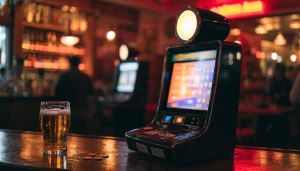
This is the uncomfortable hinge in the live-dealer proposition. The screen may present a recognisable table and a human dealer, while the business relationship sits beyond the reach of Australian casino licensing. A stream can convey presence; it cannot supply jurisdiction. In disputes, the apparent intimacy of a live game does not bring the operator closer to Australian courts or regulators.
BetStop also has a defined boundary. It applies to Australian-licensed operators and does not bind offshore gambling sites. Because there are no Australian-licensed online casinos, registration with BetStop should not be mistaken for a block on offshore casino accounts or marketing. A protection that depends on domestic licensing cannot control a service operating outside that system. The gap is significant, not technical.
Other safeguards may appear in the form of deposit limits, loss limits, session time limits and self-exclusion options. These are familiar responsible-gambling tools, but their presence on a site does not establish Australian licensing, nor does it remove the difficulty of enforcing a dispute from within Australia. A control is only as dependable as the institution required to honour it.
The legal age for gambling in Australia, including online pokies, is eighteen. That age rule sits alongside the wider regulatory arrangement; it does not make a prohibited service lawful for an operator to provide. Nor does a site’s willingness to register an adult customer answer the question of who can intervene if the relationship breaks down.
So the phrase “best live dealer casino” carries a practical complication in Australia. The country has no licensed online casino against which an offshore live-dealer service can be measured as a domestic, regulated product. The law distinguishes the operator’s conduct from the player’s, while the remedies available to the player remain limited. It is a careful legal distinction, with an uneven consumer outcome.
Bonuses, Turnover and the Cost of a “Free” Offer
The word “bonus” makes a promotion sound like a gift. In gambling, it is more often a conditional balance: money or spins attached to rules that determine how much must be wagered, what counts towards that total, and when any resulting winnings may be withdrawn. The headline amount is only the most visible part of the arrangement. The less visible part is the turnover requirement.
A specialist review recommends treating a wagering requirement of 35x or less as a more manageable benchmark and describes anything above 40x as punishing. That is a reviewer’s assessment, not a universal rule or a guarantee that an offer is fair. The calculation still depends on the wording: the multiplier may apply to the bonus alone, or to the deposit and bonus together. The difference is substantial.
The multiplier is not the amount to be won
A wagering requirement measures betting activity, not the sum a player must win. If an offer says that a $500 bonus carries a 40x requirement calculated on the bonus alone, the arithmetic is $500 multiplied by 40: $20,000 in bets. A specialist review uses that example to show the scale of the obligation. It does not mean that $20,000 must be won, nor that completing the turnover leaves a particular profit. It means the specified amount has to pass through qualifying bets before withdrawal becomes possible under those terms.
The distinction matters because a balance can shrink while the turnover counter advances. A wager contributes to activity whether it wins or loses, but the remaining balance may not survive long enough to reach the target. The larger figure is therefore not a pot of money waiting to be collected. It is a condition attached to the possibility of cashing out eligible winnings.

The base used for the multiplier changes the result. A 35x requirement applied to a $500 bonus alone produces $17,500 in required bets. If the same multiplier applies to a $500 deposit plus a $500 bonus, the calculation uses $1,000 instead: $35,000 in bets. A specialist review gives the latter as an illustration of the deposit-plus-bonus method. The advertised multiplier, by itself, cannot tell the whole story.
That is why the small print’s definition of the calculation base matters as much as the number beside “wagering requirement”. Two offers bearing the same multiplier may impose different turnover obligations if one counts only bonus funds and the other counts both deposit and bonus. The word “35x” looks precise. Without its base, it is incomplete.
A free offer can still carry a price
“Free” can describe the entry point without describing the conditions attached to the proceeds. A free-spin promotion, for instance, may place a ceiling on the winnings that can be cashed out. A specialist review notes this as a possible condition. The cap concerns the amount eligible for withdrawal, not simply the amount displayed in a balance. Other terms may also affect what can be retained, so the promotional label should not be mistaken for a promise that every win is payable in full.
The same caution applies to phrases such as “welcome bonus” or “no-deposit bonus”. Those labels do not, by themselves, reveal whether a wagering requirement applies, which funds form its base, or whether a cash-out cap limits winnings. Nor does the label establish that a promotion is available for live dealer play. A general bonus description cannot safely be read as a specific live dealer offer.
Do
- Identify the multiplier
- Identify the calculation base
- Distinguish required betting from winnings
Don't
- Rely on the headline figure
- Assume "free" means no conditions
- Mistake a general bonus for a live dealer offer
The arithmetic offers a useful antidote to promotional language. First identify the multiplier. Then identify the amount to which it applies. Finally, distinguish required betting from withdrawable winnings. If any of those pieces is unclear, the headline figure cannot settle the question. This is not a matter of decoding clever arithmetic; it is a matter of knowing which arithmetic the terms require.
A bonus can therefore have more than one cost. There is the turnover demanded before withdrawal, and there is the possibility that a cap or other condition limits what can be taken out after that turnover. The word “free” does not erase either condition. It merely arrives first.
Live Dealer Games: What the Available Evidence Can—and Cannot—Say
“Live dealer” describes a style of online casino play in which a human dealer conducts a game on camera, while participants follow the action through a digital interface. The phrase refers to how play is presented, not to a guarantee about a particular casino’s catalogue, rules or quality. That distinction matters: a familiar label can make a service sound more definite than it is.
The appeal is easy to understand. A visible person, a shared table and an unfolding round borrow something from the social life of a physical venue. Online play removes the room around the table, but the camera supplies a fragment of it: a dealer’s gestures, the pause before a result, the sense that other people are present. It is a small theatre of company, delivered through a screen.
Yet atmosphere is not the same as transparency. A live image may show a dealer and a table; it does not, by itself, establish the terms governing play, the accuracy of a platform’s descriptions or the protections available if a dispute arises. Nor does the label tell much about the experience beyond its broad format. Different services may present that format differently, and the wording alone cannot settle what any one of them offers.

The phrase “online casino live dealer games” also bundles together two separate ideas. “Online casino” describes the setting; “live dealer” describes a mode of presentation. Neither phrase identifies a specific game or confirms that one is available to Australians. In a market where the name of a format can travel farther than reliable detail about a service, that separation is useful. A category is not a catalogue.
There is a social history in the format, too. Gambling rooms have long arranged chance as a public event: a person presides, rules are made visible, and spectatorship becomes part of the ritual. The online version retains the image of that arrangement while changing its scale. The table is no longer a shared physical place. It is a broadcast, and the feeling of participation depends partly on the interface surrounding it.
That difference can be easy to overlook. A stream may feel immediate without making the whole operation visible. The camera frames what it frames; the platform determines what appears around it. Neither the dealer’s presence nor the polished staging should be mistaken for proof about matters that cannot be seen on screen.
For anyone comparing live dealer casino platforms, the useful first distinction is therefore between a general format and claims about an individual service. A description can explain that play is presented with a live dealer. It cannot, without further substantiation, establish which tables are offered, how their rules work, or whether a particular experience matches the image suggested by the label. Those are separate questions, not details hidden inside the word “live.”
The category has a clear cultural promise: less solitary play, more visible ritual. Its limits are just as clear. A camera can make a table look present. It cannot make every surrounding fact visible.
Bitcoin and Crypto Deposits: No Verified Site Details
Bitcoin is often treated as shorthand for a much larger category. It is one cryptocurrency; “crypto” can refer to other digital currencies with different names and arrangements. That distinction matters when a casino advertises a payment option: a general reference to cryptocurrency does not establish that Bitcoin is accepted, or that every currency in the category can be used.

The same care applies to live dealer play. A payment method and a game offering are separate parts of a service. A casino accepting Bitcoin would not, by that fact alone, establish that it provides live dealer games. Nor would a live dealer label establish which payment methods are available. The two claims need separate, site-specific confirmation.
That is a less glamorous answer than a list of crypto live dealer casinos. But a list without confirmed acceptance would turn a search for practical information into guesswork. Payment logos, broad promotional language and references to “crypto” can sound conclusive while leaving basic terms unsettled: which currency is accepted, whether it can be used for deposits, and what conditions apply to a transaction. Those details cannot be inferred from the word Bitcoin alone.
The term “deposit” also deserves precision. A payment option might be mentioned without clarifying whether it is available to every customer, whether the casino accepts the particular currency being considered, or how the transaction is handled. None of those details follows simply from an operator describing itself as crypto-friendly. The adjective is not a payment policy.
There is a further separation that matters in Australia: the method used to move money does not change the nature or status of the service receiving it. Bitcoin does not turn an online casino into a different kind of business. A cryptocurrency payment cannot, by itself, make an otherwise prohibited service lawful or supply protections that the service does not otherwise provide.
That point is easy to lose amid the novelty of digital currencies. Payment technology can alter how a transfer is presented, but it does not answer questions about the operator, the games, or the terms attached to an account. A coin is not a credential.
For anyone comparing claims about Bitcoin and live dealer play, the useful distinction is between a general crypto statement and an explicit description of the specific currency and transaction. Without that distinction, “accepts crypto” may be too broad to tell what can actually be deposited. “Bitcoin accepted” is narrower, but it still says nothing by itself about live dealer availability.
The overlap between crypto payments and live dealer casinos is therefore not something that should be assumed from either label. Each claim stands on its own, and a payment method cannot fill in the details of a gaming service. In this corner of online gambling, confident wording can travel faster than useful particulars. The particulars matter.

Reviews, Providers and Free Play: Evidence Before Reputation
A polished review can make an online casino seem more knowable than it is. It may describe a live-dealer experience in confident detail, praise a software provider or present free play as an inviting first step. Those claims are only as useful as the evidence behind them. Reputation, repeated often enough, is not verification.
The distinction matters because a review can blur several separate claims. A provider may be named without showing that its software is used by a particular service; a description of live tables may imply a catalogue that has not been demonstrated; and a mention of free play may sound like a current offer when it establishes no such thing. Each statement needs its own support. One cannot stand in for another.
The same restraint applies to provider names. Familiarity can lend a borrowed air of legitimacy, but a company’s presence in the wider casino industry does not prove that a particular site uses its products, or that the products are available to Australian users. Nor does a provider name, on its own, establish how a game works or what a player will encounter. Brand recognition is not a receipt.
Free play is an especially elastic phrase. It can describe a promotional claim, a demonstration mode, or simply language used to attract attention. Without clear terms and evidence of availability, it should not be treated as a usable feature. The phrase is easy to print; the practical meaning is less easily established. A free label is not a free experience.
Reviews also have limits as records of changing services. A confident account can become stale when an offer, product or access condition changes. Even a detailed description may concern a different time or audience from the one implied by its wording. The more specific the claim, the more important its date and basis become.
For that reason, a responsible account should not turn unconfirmed provider references into endorsements, or present free play as an assured option. It should distinguish observation from inference and avoid filling gaps with familiar names. That can make the prose less dazzling. It also makes it more honest.
In a market where a review may be mistaken for proof, careful language is not timidity. It is the boundary between describing a reputation and certifying a fact. A name on a page tells little by itself; a promise of free access tells less still. Reputation travels quickly. Evidence should travel with it.
Mobile Roulette and the Missing Evidence on Browser Play
A phone-sized screen can make a casino table seem close at hand. That impression is not evidence that a live roulette table is available, or that it can be reached through a mobile browser. Those are separate claims: one concerns the game, another the device, and a third the route into the service. None follows automatically from the word “mobile”.
For anyone comparing live roulette on a phone, the distinction matters. A site might describe a mobile experience without clarifying whether it runs in a browser, requires an app, or supports a particular device. A page that mentions roulette may likewise refer to a general category rather than a live table. Without clear, current details, the practical answer remains unresolved.
The screen itself can add to the confusion. A desktop page shrunk to fit a phone is not necessarily a mobile-ready interface, and a game image is not proof of a functioning live feed. Nor does a polished layout establish that controls, account functions or table information work as they appear to. Appearance travels cheaply; reliable evidence takes more.
That is especially relevant to roulette, where the live format is part of the attraction. A still image or automated animation does not establish that a human dealer is present. The label “live” should be understood as a claim requiring confirmation, not as a description guaranteed by a page’s design. No particular roulette offering can be assumed from the general presence of casino language.
Browser access deserves its own scrutiny. A browser-based service and a downloadable application may differ in access, updates and permissions, but no universal rule can settle those details for every operator. The same is true of compatibility across phones. Without specific, independently checkable information, claims about smooth play or broad device support would be decoration rather than guidance.
There is also a boundary that a smaller screen cannot erase. BetStop applies to Australian-licensed operators and does not bind offshore sites. A mobile interface does not alter that limit or establish any protection by itself.
The sensible reading of mobile roulette claims is therefore a narrow one: they describe something to verify, not a feature that can be taken for granted. Availability, live-dealer status and browser compatibility each need distinct evidence. In the absence of it, a search for a live roulette table on a phone ends where it began—with an unanswered question. A bright button is not an answer.
Real-Money Play, Verification and Withdrawal Limits
The point at which a live dealer session becomes a cash-out request is often less cinematic than the play itself. A balance on screen is not the same thing as money received: before a first withdrawal, the account may have to pass identity checks, and the amount requested may be subject to the casino’s payout rules.
A specialist casino review reports that identity checks before an initial withdrawal can involve a photo of an identity document and proof of address; some operators may also ask for a selfie holding the document. The practical consequence is that verification is not merely a formality to consider after a win. If documents are incomplete, unclear or inconsistent with account details, processing can be delayed while the operator asks for more information. The review’s report describes a pattern, not a guarantee that every casino follows the same procedure.
Withdrawal ceilings can matter even when a win is accepted. A specialist review also reports that some casinos set weekly or monthly payout caps in the range of $5,000 to $10,000. Under such a limit, a $50,000 jackpot could be paid in instalments over a period of years rather than transferred at once. The headline balance may therefore describe what is owed, not when it will all arrive. Small print, large consequences.
These terms belong to the individual operator’s rules, so a live dealer label says nothing by itself about verification timing or withdrawal limits. Nor does a successful deposit establish that a later cash-out will be uncomplicated. The relevant details are those governing document approval, payout frequency, maximum amounts and what happens to any balance above a cap. Those conditions can shape the experience more than the table itself.
There is also an important limit to any promise of protection: BetStop applies to Australian-licensed operators and does not bind offshore sites. It cannot serve as an account-level safeguard where an offshore operator falls outside that system.
For real-money play, the sequence matters: funds are wagered, a withdrawal is requested, identity and address evidence may be reviewed, and payout conditions determine how money is released. That is a practical description, not an endorsement. Where the operator’s terms are unclear, neither a displayed balance nor the phrase “live dealer” resolves the uncertainty.
Blackjack Availability Cannot Be Assumed
Blackjack has a familiar place in casino culture: a table, a dealer, decisions made in view of other people. Its apparent simplicity is part of the appeal. The game can look like a contest of judgement rather than a machine’s hidden arithmetic, even though familiarity with the setting says nothing about the quality or legitimacy of a particular service.
For Australians, the distinction between a recognisable game and an available online product matters. Blackjack is among the casino-style games treated as a prohibited interactive gambling service when supplied to customers in Australia. A site’s use of the word “blackjack” does not, by itself, establish that a live table is operating, that Australian residents can join it, or that a named service is authorised to provide it. A label is not a licence, nor a table.
The live-dealer format adds another layer of expectation. The phrase suggests a person dealing cards in real time, but the description alone cannot establish what a particular site offers or how its tables work. There is no reason to treat the promise implied by a familiar format as proof of a specific product. Casino language is good at making a possibility sound like a settled fact.
That distinction is especially important because the Australian market has no domestic online casino licence. The legal framework concerns operators providing these services, rather than making a player’s act of participation a criminal offence. Still, the absence of player liability is not an assurance of protection: Australians have no legal recourse in Australia if an offshore casino refuses to pay winnings. The table may look orderly. The remedies may not.
Blackjack, then, is best understood as a subject of interest, not a guarantee of access. A name on a page cannot establish a working live game, and the familiar theatre of cards and dealer does not settle the question of who stands behind it. That is a less satisfying answer than a neat catalogue. It is also the more honest one.
Casino Sites and Software: What Is Not Established
A casino’s name, its software and the service presented to a player are separate things, though promotional language often folds them into one reassuring package. A familiar-looking site does not, by itself, identify who built its live dealer interface. Nor does a software label establish which tables, functions or conditions are available through a particular operator. Those links require evidence specific to the product and the site.
No particular live dealer platform or software provider can be identified here, and no site-specific technical feature can be attributed to one. Naming a provider without a substantiated connection would turn recognition into an endorsement. That is a small leap in wording and a large one in implication.
The distinction matters because “software” can mean several things: the visible lobby, the connection carrying a live stream, the account functions around a game, or the underlying system supplied to an operator. A site may use different suppliers for different parts of its service. Without clear, attributable information, the label says little about what a player would actually encounter. It is not a technical audit.
The same restraint applies to claims about quality. A slick presentation cannot establish that a live table is available, that a feature works in a particular way, or that the service handles a session reliably. Those are claims about a specific product in use, not conclusions that follow from a brand name or a general description. A confident logo is not documentation.
Bonuses belong to another category. Their terms concern the offer attached to an account; they do not prove who supplied the casino software, what the platform can do, or whether a named site provides live dealer play. Conversely, identifying software would not establish any bonus condition. Combining the subjects can make a page sound comprehensive while leaving the central claims unsupported.
That separation also limits what can responsibly be said about individual sites. Without attributable details, there is no basis for naming an operator as a live dealer destination, describing its platform, or treating a software association as a reason to trust it. The absence of a technical claim is not a technical verdict. It is simply a boundary.
In this market, those distinctions carry more weight than a catalogue of impressive-sounding labels. A site name, an interface and a software supplier are not interchangeable evidence, and none should be used to fill the gaps left by another.
Names are not proof.
Choosing What “Top” Means Without a Verified List
Top operators
Choosing a live dealer casino is easier when you can quickly check the details available for each option. Use these short verdicts as a starting point, then verify that the games and terms suit you.
-
7Bit Casino
- License
- Curacao, operated by Dama N.V.
7Bit Casino is operated by Dama N.V. and holds a Curacao licence.
-
Golden Pokies
- License
- Curacao
Golden Pokies is listed with a Curacao licence.
-
Rollero Casino
- License
- Curacao Gaming Control Board OGL/2023/176/0095 (Hollycorn N.V.)
Rollero Casino holds Curacao Gaming Control Board licence OGL/2023/176/0095, with Hollycorn N.V. as the operator.
-
GoldenCrown
- License
- Curacao Gaming Control Board OGL/2023/176/0095 (Hollycorn N.V.)
GoldenCrown holds Curacao Gaming Control Board licence OGL/2023/176/0095, with Hollycorn N.V. as the operator.
-
Ricky Casino
- Payout speed
- crypto under 1 hour, PayID 1-3 business days
- Min. deposit
- A$20 (A$30 to qualify for the bonus)
Ricky Casino lists crypto withdrawals as taking under an hour and PayID withdrawals as taking 1–3 business days. The minimum deposit is A$20, or A$30 to qualify for the bonus.
-
Thor Casino
- License
- Curacao – Antillephone N.V. (Versus Odds B.V.)
- Min. deposit
- EUR 20
Thor Casino is licensed in Curacao through Antillephone N.V. for Versus Odds B.V. Its minimum deposit is EUR 20.
-
MrPacho
- Payout speed
- crypto 30-120 minutes, fiat 24-72 hours
- Min. deposit
- A$30
MrPacho lists crypto payouts at 30–120 minutes and fiat payouts at 24–72 hours. The minimum deposit is A$30.
-
SkyCrown
- License
- Tobique Gaming Commission
- Payout speed
- crypto ~10-15 minutes, fiat 1-5 days
- Min. deposit
- A$30
SkyCrown is licensed by the Tobique Gaming Commission. Its listed payout times are around 10–15 minutes for crypto and 1–5 days for fiat; the minimum deposit is A$30.
-
Uptown Pokies
- License
- Curacao (operating since 2017)
- Min. deposit
- A$20
Uptown Pokies has been operating since 2017 and lists a minimum deposit of A$20. It is licensed in Curacao.
-
LevelUp Casino
- License
- Curacao eGaming OGL/2023/174/0082 (Dama N.V.)
- Min. deposit
- A$15
LevelUp Casino holds Curacao eGaming licence OGL/2023/174/0082, with Dama N.V. as the operator. The minimum deposit is A$15.
“Top” sounds like a settled position, as if a row of casinos had been measured against one public standard. In practice, the word can conceal several different judgements: breadth of service, ease of use, payment terms or the way a platform presents its tables. Those are not interchangeable qualities, and a site that appears strong on one measure may tell a different story on another.
That matters especially for live dealer play, where the appeal is partly social. A table is not just a line in a catalogue; it is a designed encounter between a player, a dealer and a screen. But atmosphere cannot be inferred from a promotional label, and a polished interface does not establish how a service handles money or disputes. A ranking that blurs those distinctions offers certainty without showing its work.
Without one, “top” is decoration.
The phrase “best online casino with live dealer” can sound like a request for a single answer. There is no universal one: preferences differ, and the features that matter to one person may be irrelevant to another. Even a carefully defined ranking is a snapshot, not a permanent verdict. Services change; a claim that once described a platform may not describe it later.
This is not a reason to treat every casino with live dealer tables as equivalent. It is a reason to keep claims proportionate. A list should identify what it compares and avoid implying that a broad label guarantees quality, safety or suitability. A neatly ordered set of names can look authoritative while hiding the question that ought to come first: what, exactly, is being measured?
A title can promise more than its evidence can carry. “Top” is only meaningful when the measure is visible. Otherwise it is a flourish, not a finding.
How do I know if an online casino is safe to play at?
There is no Australian-licensed online casino, so an offshore site's foreign licence does not give you the same local protection. If it refuses to pay your winnings, you have no legal recourse in Australia to compel payment.
What is the legal age for online gambling in Australia?
You must be 18 or older to gamble in Australia, including on online pokies.
What does “wagering requirement” actually mean?
It is the amount of qualifying bets you must make before you can withdraw winnings tied to a bonus. For example, a 40x requirement on a $500 bonus means $20,000 in bets if the multiplier applies to the bonus alone.