
Separate payment claims from what the cashier shows
Australian payment habits may create expectations, but general availability does not confirm casino deposits, withdrawals or bonuses.
Pokies, Payment Habits and the Neosurf Evidence Gap
The interest in Neosurf alongside Australian online pokies reflects a practical question: whether a familiar way of paying is accepted by a particular service. But familiarity with a payment method is not evidence of casino acceptance. Neosurf acceptance at any particular casino remains unconfirmed, so no operator can responsibly be named as a confirmed option on that basis.
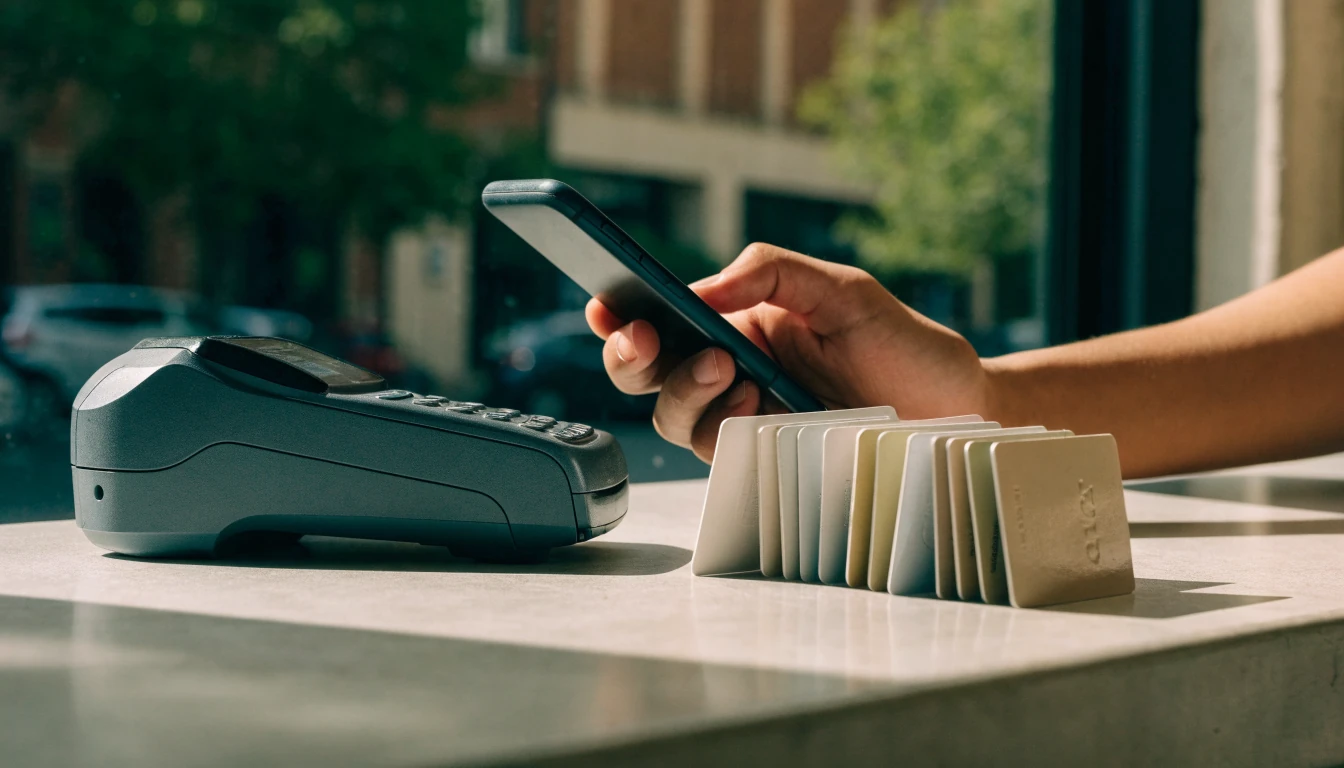
Australia’s everyday payment landscape helps explain the expectation that different methods might be available. Contactless credit and debit cards are accepted almost everywhere, as are mobile wallets such as Google Pay and Apple Pay. Consumers are also comfortable moving between cards, mobile wallets and services linked to banks, including PayPal. Switching methods is ordinary; finding the same range in every online setting is another matter.
A cashier is where an operator presents the methods it supports, but a method’s general presence in Australian commerce says nothing conclusive about its presence there. A payment option can be common in shops and still be absent from a particular online service. The reverse is also possible: an online cashier may show an option that is not familiar from daily purchases. Local habits create expectations, not confirmation.
Top operators
Use this list as a starting point when researching casinos for Neosurf in Australia. The details provided highlight each operator’s known licensing or payment terms, but do not confirm Neosurf availability.
-
7Bit Casino
- License
- Curacao, operated by Dama N.V.
7Bit Casino is operated by Dama N.V. and is licensed in Curaçao. The supplied details do not specify whether it accepts Neosurf.
-
Golden Pokies
- License
- Curacao
Golden Pokies is listed as licensed in Curaçao. No payment-method details are provided to establish whether it accepts Neosurf.
-
Rollero Casino
- License
- Curacao Gaming Control Board OGL/2023/176/0095 (Hollycorn N.V.)
Rollero Casino holds Curaçao Gaming Control Board licence OGL/2023/176/0095, under Hollycorn N.V. The supplied details do not specify Neosurf availability.
-
GoldenCrown
- License
- Curacao Gaming Control Board OGL/2023/176/0095 (Hollycorn N.V.)
GoldenCrown holds Curaçao Gaming Control Board licence OGL/2023/176/0095, under Hollycorn N.V. No information provided confirms whether Neosurf is accepted.
-
Ricky Casino
- Payout speed
- crypto under 1 hour, PayID 1-3 business days
- Min. deposit
- A$20 (A$30 to qualify for the bonus)
Ricky Casino lists a minimum deposit of A$20, or A$30 to qualify for the bonus. Its stated payout times are under an hour for crypto and 1–3 business days for PayID; Neosurf acceptance is not specified.
-
Thor Casino
- License
- Curacao – Antillephone N.V. (Versus Odds B.V.)
- Min. deposit
- EUR 20
Thor Casino is licensed in Curaçao by Antillephone N.V. for Versus Odds B.V., and its minimum deposit is EUR 20. The supplied details do not confirm Neosurf acceptance.
-
MrPacho
- Payout speed
- crypto 30-120 minutes, fiat 24-72 hours
- Min. deposit
- A$30
MrPacho lists a minimum deposit of A$30. Its stated payout times are 30–120 minutes for crypto and 24–72 hours for fiat; Neosurf availability is not specified.
-
SkyCrown
- License
- Tobique Gaming Commission
- Payout speed
- crypto ~10-15 minutes, fiat 1-5 days
- Min. deposit
- A$30
SkyCrown is licensed by the Tobique Gaming Commission and lists a minimum deposit of A$30. Its stated payout times are around 10–15 minutes for crypto and 1–5 days for fiat, but Neosurf acceptance is not confirmed.
-
Uptown Pokies
- License
- Curacao (operating since 2017)
- Min. deposit
- A$20
Uptown Pokies is listed as licensed in Curaçao, has been operating since 2017, and has a minimum deposit of A$20. The available details do not say whether it accepts Neosurf.
-
LevelUp Casino
- License
- Curacao eGaming OGL/2023/174/0082 (Dama N.V.)
- Min. deposit
- A$15
LevelUp Casino holds Curaçao eGaming licence OGL/2023/174/0082 under Dama N.V. Its minimum deposit is A$15; the supplied details do not establish Neosurf availability.
That distinction matters especially when the payment name is attached to a broad category such as “Australian pokies”. The phrase can suggest a coherent local market with shared standards and a common set of payment choices. In practice, a label used in a search does not establish that the service is Australian-operated, locally licensed or available on the same terms as a domestic retailer. Nor does it show that Neosurf appears in its cashier. The wording compresses several separate questions into one.
There is also a difference between a payment brand being mentioned somewhere and its acceptance being established for a particular operator. A general description, an old reference or a page about payment methods cannot, on its own, demonstrate what a live cashier currently offers. Payment arrangements can be specific to the operator and can change. Without an operator-specific confirmation, a claim that a casino accepts Neosurf would turn an expectation into a fact.
The word “best” does not solve that problem. A ranking of Neosurf casinos would require confirmed acceptance at each named service, as well as a consistent basis for comparing them. Neither a broad Australian payment habit nor the appearance of Neosurf in a search result supplies that basis. A polished shortlist could make uncertainty look settled; presentation is not evidence.
The same caution applies to mobile use. A service being accessible on a phone does not establish that its cashier offers Neosurf, just as a payment method’s availability in other digital settings does not confirm casino support. Device, operator and payment method are separate parts of the question. Combining them in one phrase does not make them interchangeable.

Australian payment culture is flexible partly because people already move among familiar systems without treating any one as universal. A card may be convenient in one setting, a mobile wallet in another, and a bank-linked service elsewhere. That flexibility can make a new method seem like a natural addition. Yet the sensible inference stops there: Australians’ readiness to switch methods does not show that a particular cashier supports Neosurf.
The result is a narrow but important conclusion. The local context explains why Neosurf might be considered among possible payment choices, but it cannot verify acceptance at Australian-facing casino services. Until an operator’s own current cashier or terms clearly establish the method, the claim remains unconfirmed. A familiar payment habit is not a confirmation.
Deposits: What Can—and Cannot—Be Confirmed
A small deposit is not merely a smaller version of a large one. It is a way of testing how little money a service will accept, and whether that threshold suits the person using it. The interest in a ten-dollar Neosurf deposit follows that practical logic: the figure stands for a limited outlay, not necessarily a promise that any particular cashier will accept it.
That distinction matters. A payment method can be familiar in everyday life without being available for a particular transaction. Acceptance depends on the service handling the payment, not on the name of the method alone. A cashier is therefore not a universal menu shared by every online business. Its available options, conditions and limits belong to the individual operator and may differ from one service to another.
For Neosurf, the deposit question has several separate parts. Is it offered as a way to pay in? What minimum amount would apply? Would a fee be charged? Would the payment be processed in Australian dollars, or converted from another currency? Those details are not interchangeable. A method’s appearance in a general discussion of casino payments would not, by itself, settle any of them for a particular transaction.
A ten-dollar figure is a question, not a guarantee
Searches for a ten-dollar deposit often express a sensible preference for keeping the initial outlay small. But a figure typed into a search box does not establish that an operator accepts that amount, or that it accepts Neosurf at all. The amount may be below an operator’s minimum, above it, or unavailable as a selectable value; without operator-specific terms, none of those possibilities can be treated as fact.
This is why the word “minimum” deserves care. It is not a property of Neosurf in the abstract. It would be a condition set for a particular payment route by the service offering it, potentially alongside rules about currency, account status or transaction handling. A ten-dollar figure may be the point of interest, but it cannot stand in for those terms.
Nor does a low starting amount necessarily mean that the full cost of a transaction is equally small. A fee, currency conversion or other condition could affect the amount ultimately charged, but those matters have to be established for the particular route. Guessing from another payment method, another country or another operator would produce tidy arithmetic and unreliable guidance.

The steps belong to the individual cashier
“Paying with Neosurf” can sound like one standard procedure. In practice, the sequence for any online payment is shaped by the service’s own cashier and by the payment provider’s requirements. A familiar label does not show which fields would appear, what information would be requested, whether the method would be offered to an Australian customer, or what would happen after submission.
That is the narrow point at which a general description stops being useful. Naming a payment method is not the same as confirming a deposit route. Likewise, knowing that a person wants to pay in Neosurf does not establish that the cashier supports it, or that a payment would be accepted once initiated. A displayed option, where one exists, would still need to be read alongside the conditions attached to that particular transaction.
There is no sound way to infer a Neosurf procedure from the process for another method. Card details, bank-linked services and prepaid payment products are not necessarily handled alike. Even a broad description of how online deposits work cannot supply Neosurf-specific instructions without turning a possibility into a claim.
Fees and final amounts are separate terms
The amount selected and the amount charged may coincide, but that should not be assumed. Payment fees and conversion costs, where applicable, depend on the relevant service and transaction conditions. A search for a small deposit does not answer whether a fee is charged, who charges it, or whether the displayed amount is denominated in Australian dollars.
The distinction is useful beyond this one method. A payment route can involve more than the visible deposit figure: a provider may impose its own terms, while the receiving service may set separate rules. Those layers are easy to collapse into a single number when a cashier presents a neat button and a blank field. Neat interfaces are not evidence of simple terms.
For that reason, a claim that Neosurf deposits are free, instant, or available from a particular minimum would need to be tied to current conditions for the specific operator and route. Without that connection, such wording tells more than it knows. The same caution applies to claims about the “best” deposit option: the label cannot resolve a question of availability, cost or suitability.
The deposit-focused interest is straightforward: people want to know whether Neosurf can be used to pay in, how little can be deposited, and what the transaction costs. Those are concrete questions, but they have operator-specific answers rather than a universal Neosurf rule. A small amount is an intention. The cashier’s terms are the transaction.
Casino Comparisons Without an Unsupported Shortlist
A ranking of casinos that accept Neosurf would imply more than a collection of names. It would suggest that each service had been checked for the same thing, under comparable conditions, and that the results were current enough to justify putting one ahead of another. Without that foundation, a “best” list is decoration masquerading as research.
The central question is not whether Neosurf exists as a payment method, but whether a particular operator currently accepts it for Australian customers. That claim would need to be established at the operator level. A general description of Neosurf, a mention of it on a payment-method page, or a reference in an old review cannot, by itself, establish that a casino’s cashier offers it now. Nor does the presence of a payment logo settle what transactions it supports.

Even a confirmed mention would not automatically make two operators comparable. A meaningful comparison would need to distinguish what the payment method can do at each service and under what terms. If one listing referred to a deposit option and another merely named Neosurf among possible methods, their apparent agreement could conceal a difference that matters. A ranking would flatten that difference into a tidy order. Tidy, but not informative.
The same problem applies to labels such as “best Neosurf casino” or “best casino site for Neosurf deposits”. “Best” needs a stated measure. It might mean that a payment method is available, that its conditions are clear, or that the surrounding service compares favourably on some defined basis. Those are different claims. No single ranking can make them equivalent simply by placing names in numbered order.
There is also a gap between a method being associated with an operator and being available to every customer in a given market. Payment options can depend on location, account status, or changes made by the operator. A list that does not establish its scope risks presenting a broad promise where the underlying claim is narrower. A country label alone cannot fill in those missing details.
For that reason, no shortlist of Neosurf casinos can responsibly be presented here. Naming operators would turn an unestablished payment claim into a recommendation by implication. Ordering them would add a second unsupported claim: that the named services had been assessed against one another using a consistent standard. Neither follows from the fact that people are interested in the comparison.
Searches for a Neosurf casino site, or for several sites that take Neosurf, express a practical wish: reduce uncertainty before money is involved. The wish is understandable. The answer cannot be supplied by repeating the desired category as though it were proof. A result labelled “Neosurf casino” may be a broad editorial tag, a reference to another market, or a claim that has gone stale. The label alone says little about its basis.
A proper comparison would also have to separate acceptance from quality. A payment option, even if established, would not demonstrate that an operator was suitable, reliable, or preferable. Conversely, an operator’s reputation would not prove that Neosurf was available through its cashier. Combining these questions into one score gives the appearance of completeness while leaving the essential payment claim unresolved.
There is no useful substitute in inventing a ranking from familiarity, popularity, or the sheer frequency with which a name appears online. Familiarity measures exposure, not payment compatibility. A polished comparison table can make weak evidence look stronger than it is; the formatting does not improve the underlying claim.
The honest comparison, then, is a comparison that stops short of naming winners. Without operator-specific confirmation and a common basis for assessment, a list would be more certain than its evidence. No shortlist is safer than a persuasive one built on implication.
Instant Payouts and the Difference Between Paying In and Cashing Out
“Instant” can describe a payment arriving at a casino, a withdrawal being approved, or winnings reaching a bank account. These are separate stages, often collapsed into one attractive word. For anyone weighing claims about Neosurf and instant payouts, the distinction matters: a method used to pay in would not, by itself, establish that winnings can be sent back through it.

A cashier is built around transactions, but deposits and withdrawals travel in opposite directions and can follow different rules. A payment option might be available for adding funds without being available for receiving them. Even where a casino offers a withdrawal route, approval and delivery are not necessarily the same event. An account check can also stand between a request and its processing; online casinos typically require customers to complete a Know Your Customer assessment before financial transactions.
The mechanics are less dramatic than the word “instant.” A withdrawal request may be subject to the operator’s process, the payment method’s capabilities and account checks. None of those stages can be reduced to a single clock without specific, operator-level terms.
That distinction is easy to lose in the language of “real money” play. The phrase signals that a search is about cash stakes and winnings rather than a demonstration mode, but it says nothing about how a payout moves. Nor does adding “new” to a casino search establish that a recently opened service supports a particular payment method. A new name is not a payment specification.
“Instant” also tends to be used as if it described the entire journey. In practice, a fast transaction at one stage would not prove that every later stage is fast. A cashier may show a route for putting money in while giving no corresponding route for cashing out. The wording of a payment page, the withdrawal rules and the final destination all matter; a deposit label cannot answer for them.
This is why a supposed best instant Neosurf casino cannot be identified by speed language alone. A meaningful comparison would require confirmed Neosurf withdrawal availability, the conditions attached to it and a stated processing timetable. Without those details, “instant” is an adjective doing the work of evidence. It sounds decisive. It is not.
The distinction applies to no-deposit claims as well. A bonus phrase does not establish a payout route, and the presence of winnings in an account does not tell how they may be withdrawn. Promotional wording and payment mechanics answer different questions. One cannot stand in for the other.
For Australian audiences, there is a further boundary around real-money online casino services. A promise of quick cashing out should not be mistaken for a guarantee of access, payment or legal protection. Australian consumer law does not protect people using offshore casinos. Speed is only one part of a transaction; it cannot make the surrounding service safer or more certain.
The practical meaning is plain: paying in and cashing out are distinct transactions, and Neosurf cannot be called an instant withdrawal method on the basis of a deposit-related label. Without a confirmed payout route and terms, speed remains a claim, not a timetable.
The Australian Legal Setting Behind the 2026 Search
A payment method can make a casino seem locally familiar. It does not make the service Australian, or alter the law governing who may provide it. In Australia, the legal distinction is between the operator offering online casino gambling and the individual who encounters an offshore site. Those positions are not treated as interchangeable.

The Interactive Gambling Act 2001 prohibits operators from providing real-money online casino games to people physically located in Australia. The prohibition covers casino-style gambling, rather than turning on whether a site accepts a particular payment option. A Neosurf label, or any other cashier feature, cannot change that legal status.
The Act’s focus on operators matters. It does not explicitly criminalise an individual for using an offshore casino. That is not the same as approval, a guarantee of access, or a declaration that offshore services are lawful to provide. The law places the prohibition on the supply of the service to people in Australia; it does not convert a foreign site into a locally authorised business simply because an Australian can encounter it online.
Enforcement sits with the Australian Communications and Media Authority, commonly known as ACMA. The regulator is responsible for enforcing the Act, including action directed at prohibited services. Offshore sites may be subject to access restrictions, and enforcement is an active part of the legal setting. The boundary is not merely a sentence in legislation.
That distinction can be easy to miss when a site uses Australian currency, recognises familiar payment habits or describes itself as suitable for Australian customers. Such details are commercial signals, not evidence of Australian licensing. The Act does not create a domestic licence for offshore online casinos by virtue of their willingness to accept customers from Australia. An Australian-facing service remains an offshore service if it is operated from elsewhere.
There is also a practical consequence for consumer rights. Australian consumer law does not protect players who use offshore casinos. If a dispute arises over an account, payment or winnings, the protections available in dealings with an Australian business cannot simply be assumed to apply. A familiar payment method offers no substitute for those protections.
The word “Australian” therefore carries several meanings that should not be collapsed into one. It may describe the people a site seeks to attract, the payment choices it displays, or the country in which a customer is located. None of those descriptions establishes that the operator is an Australian-licensed casino. Under the law, the central issue is the provision of prohibited online casino gambling to people in Australia, not the local appearance of the cashier.
The legal position is plain, even when the websites are not.
Games and Payment Methods Are Separate Questions
A game and a payment method belong to different parts of an online casino’s operation. The game is the entertainment product; Neosurf, where offered, would be a way to move funds into an account. Putting the two terms together does not establish that they are available as a pair.
That distinction matters because searches for games associated with Neosurf can make the relationship sound more direct than it is. A game does not acquire a payment method of its own. Payment choices are presented through the casino’s cashier, while games sit within the site’s gaming catalogue. The cashier and catalogue answer different questions.

A title appearing on a site would not, by itself, show that Neosurf could fund play there. Nor would a payment option imply access to any particular game. Even when both subjects are mentioned on the same page, proximity is not proof of a working connection between them. The wording may describe a general category, an old arrangement or simply two topics placed side by side.
This is not a technical nicety. The language of online gambling tends to compress several steps into one phrase: a casino, a game, a payment choice, then play. In practice, each link depends on a separate decision by the service. A payment method may be offered without every game being available to every account; a game catalogue may be described without establishing which ways of paying are supported. Neither proposition settles the other.
The same separation applies to broad phrases such as “Neosurf casino games” or “casino payment with Neosurf”. One points towards a game category and the other towards a transaction method, but neither identifies a confirmed combination. The phrase “Neosurf slot games” is especially easy to misread as though the payment method defines the games themselves. It does not. Payment is not a game feature.
In Australia, there is a further distinction between the language used by offshore gambling services and the legal status of those services for people in the country. The Interactive Gambling Act 2001 prohibits operators from providing real-money online casino games to people physically located in Australia. A payment label cannot alter that status or turn a game into a locally authorised service.
The neatness of the phrase is misleading. Games and payments remain separate questions; joining them in a search term does not join them in fact.

What “Australian Casino” Can Mean in This Context
“ Australian casino” can describe several different things, and they are not interchangeable. It may mean a service aimed at people in Australia, a site that displays prices or payment information in Australian dollars, or an operator licensed under Australian law. A local-looking interface does not, by itself, establish the last of these.
The same distinction matters when Neosurf enters the description. Australian payment preferences can shape what people expect to see at a cashier, but they do not show that a particular casino accepts Neosurf. A method being familiar in the country and a method being supported by an individual operator are separate claims. The phrase “Australian casino with Neosurf” can blur them into one.
There is a more consequential ambiguity beneath the wording. Australia does not permit operators to provide real-money online casino games to people physically in the country. The Interactive Gambling Act 2001 covers casino-style services; the Australian Communications and Media Authority enforces the law. An offshore site does not become an Australian-licensed service merely because it courts Australian customers, uses local terminology or lists a payment option familiar to Australians.
That distinction is about the operator, not a claim that players are criminally liable for using an offshore site. But the absence of player liability does not turn an offshore service into a locally regulated one. Australian consumer law does not protect people using offshore casinos. The label can sound domestic while the protections are not.

The phrase, then, carries two questions: whether Neosurf is accepted by a particular operator, and what “Australian” says about that operator’s legal status. Neither answer follows from the other. Payment language is not a licence; a country-specific landing page is not one either.
A neat label. A less neat reality.
Neosurf Withdrawals: No Verified Route or Timetable
A payment option on a deposit screen does not, by itself, tell anything about how winnings can be collected. Paying in and cashing out are separate transactions, governed by separate conditions. A casino that accepts a method for deposits would not thereby confirm that it can return funds through the same channel.
That distinction matters when Neosurf is part of the question. A withdrawal route would need to be stated as such, with its own eligibility rules and processing details. The method’s presence in a cashier, if present, would not establish those terms. Nor would a general claim that a casino supports Neosurf settle whether winnings can be sent to a Neosurf account, voucher or other destination. Those are different propositions, not fine print on one.
The practical point is modest but important: a withdrawal should not be planned around an assumption carried over from depositing. “Instant” is not a synonym for “possible”.
The same caution applies to searches for Neosurf withdrawals at Australian pokies sites. The wording may suggest a familiar pairing between a payment brand and a casino, but it cannot establish that the service is available, that a withdrawal is supported, or that the destination would match the way funds were paid in. Search language compresses several questions into one; a cashier’s terms would have to answer them separately.
Even a stated withdrawal method would not necessarily mean that a payment clears at once. Online casinos may require identity checks before allowing financial transactions, so payment timing and account verification are distinct matters. That is a general condition of casino transactions, not a Neosurf-specific timetable.
A deposit method is not a receipt. The gap between the two is where assumptions tend to become expensive. Until an operator’s own terms spell out those details, the deposit side and the cash-out side remain separate.
Paying Online in a Country Accustomed to Switching Methods
Payment habits in Australia are not built around a single instrument. Cards remain part of ordinary online spending, mobile wallets such as Apple Pay and Google Pay are familiar, and services linked to bank accounts, including PayPal, sit alongside them. Switching between these options is unremarkable: the choice can depend on the checkout, the account already in use, or the form of payment a service accepts.

That flexibility helps explain why a prepaid voucher such as Neosurf attracts interest in connection with online casino payments. It belongs to a different payment category from a bank-linked service or a card, so its appeal may be distinct. But a country’s willingness to move between methods says nothing, by itself, about whether a particular operator supports any one of them.
The distinction is easy to lose in a cashier menu. Familiarity with digital payments can make a new method seem as though it should fit naturally into the same routine. Yet acceptance is a decision made at the individual service level, not a consequence of Australian consumers being comfortable with mobile wallets or PayPal. Nor does a general appetite for switching establish the terms attached to a particular payment option.
Neosurf, then, is best understood here as the subject of a payment-method question, not as a confirmed route into an online casino. No acceptance claim follows from the wider Australian habit of moving among cards, wallets and bank-linked services. The habit is real; the inference is not.
There is a small social history in that contrast. Digital payment systems encourage the impression that money has become frictionless, available in whichever form a screen happens to offer. In practice, each method still depends on separate arrangements between providers and merchants. A familiar interface can disguise that boundary, but cannot remove it.
For anyone assessing a named service, its own current cashier information is the relevant place to establish what it accepts. General Australian payment preferences cannot settle the Neosurf question. The menu decides.

Bonuses Cannot Be Verified Alongside Neosurf Acceptance
A payment method and a promotional offer answer different questions. Neosurf acceptance, even where an operator states it, would not by itself establish that a bonus is available, that the payment qualifies, or that any particular terms apply. The reverse is also true: a bonus announcement would not show that Neosurf can be used to fund an account.
That distinction matters because promotional language can make separate conditions look like one package. A headline may mention a payment brand beside a bonus, while eligibility, qualifying transactions and other restrictions sit elsewhere—or are not clear at all. Without terms tied to a specific service and payment route, the association is not reliable.
There is no established Neosurf-linked bonus arrangement to describe, so naming an offer or presenting a set of conditions would turn uncertainty into promotion. The restrained conclusion is less enticing, and more useful: the method and the incentive must be assessed independently, and neither should be inferred from the other.
There is also a larger Australian context. The Interactive Gambling Act 2001 prohibits operators from providing real-money online casino games to people in Australia. The Australian Communications and Media Authority enforces that law. A promotion attached to an offshore casino does not make the service an Australian-licensed product, and Australian consumer law does not protect players using offshore casinos.
A bonus is not a payment feature. Nor does promotional wording settle whether a service is lawful to offer in Australia. On this subject, the boundary between an enticing phrase and a dependable condition is precisely where caution belongs.
Which online casinos accept American Express for deposits?
Jackpot City Casino, Spin Palace, Ruby Fortune, Ignition Casino, Joe Fortune and PlayAmo are listed as supporting Amex deposits for Australian players.
Are casino Amex payments instant?
Amex deposits are processed instantly. Withdrawals can take up to five days to clear.
What should I do if my American Express deposit is declined?
Amex or your bank may block gambling payments to a particular website. Check with your card issuer whether the transaction was blocked.
Are there any limits on how much I can deposit or withdraw using American Express?
Yes. Deposit and withdrawal limits are set by each casino and can vary; Amex limits are usually higher than those for Mastercard and Visa.
Can I withdraw winnings directly to my American Express card?
Some casinos allow Amex withdrawals, but others do not. Where withdrawals are supported, you generally need to have deposited with Amex first, and the withdrawal may take up to five days to clear.
Are there any fees for depositing with American Express?
Amex deposits typically have no fee, but a casino may charge a 1.5% surcharge. A 3% currency-conversion fee may also apply, and withdrawal fees can vary.
How can I know if an online casino will accept American Express?
Check the casino’s cashier for Amex before depositing; supported payment methods are shown there. Confirm any applicable limits and fees as well.