
Know When a Bitcoin Deposit Is Actually Available
A wallet’s “sent” status is not casino credit: blockchain confirmation and operator processing are separate steps.
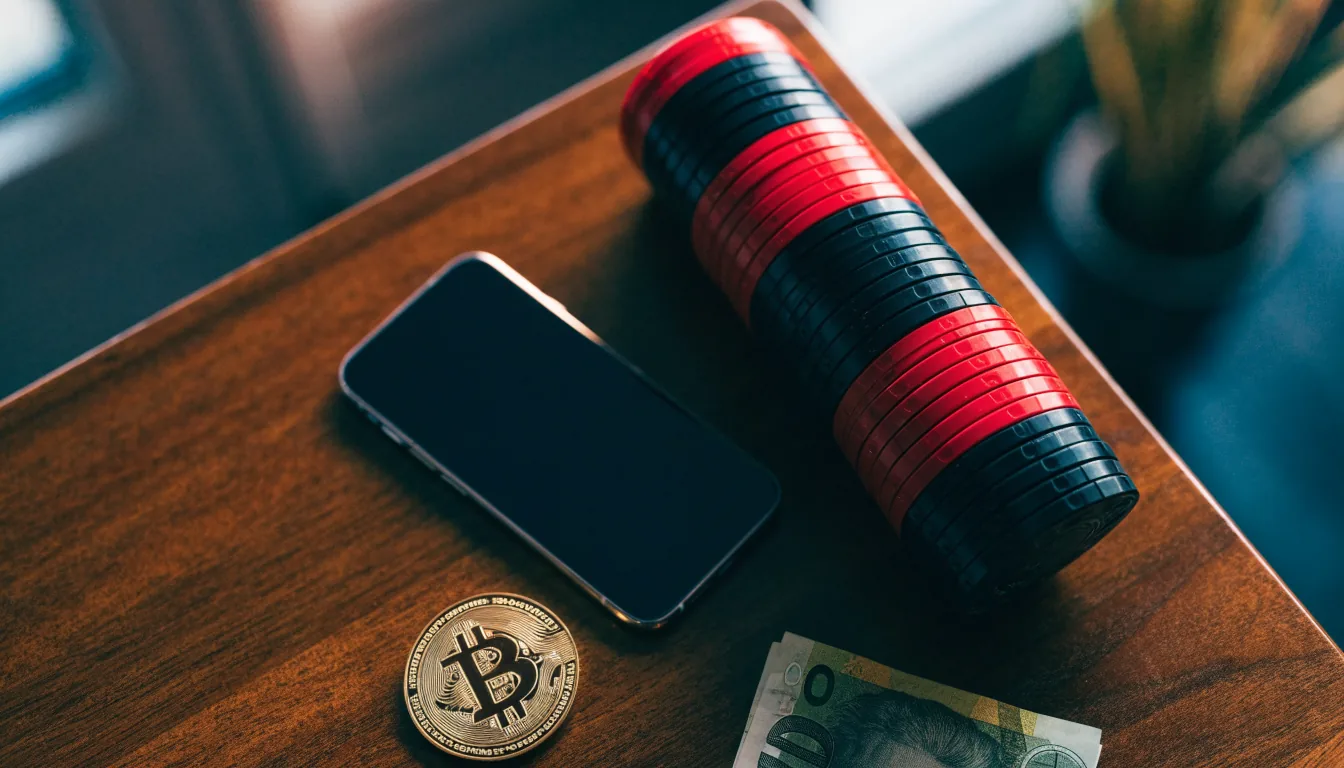
How Bitcoin Deposits Become Casino Balance
A Bitcoin transfer does not become a casino balance at the moment a wallet displays “sent”. That label describes the wallet’s side of the transaction; it does not, by itself, mean that the receiving account has credited the funds. Between the two sits the Bitcoin network, where a transaction is broadcast, recorded and gradually confirmed.
A specialist review describes offshore Bitcoin deposits as being credited after blockchain confirmations. The distinction matters: a casino’s payment system can recognise a transaction before the network has given it the confirmation status the operator requires. Detection and credit are separate events, even when they occur close together.
Once broadcast, a Bitcoin transaction can be visible to network services while it is still waiting to be included in a block. Inclusion records the transfer in the blockchain. Further blocks added after that provide further confirmations. The transaction is not simply a message from one wallet to another; it becomes part of a shared public record that can be checked independently.
For a casino, that record is a basis for matching an incoming payment to an account and deciding whether its deposit conditions have been met. The casino’s own balance is a separate ledger: it records what the account is allowed to use on the site. A blockchain entry and an available casino balance are therefore related, but they are not the same thing. One records a network transaction; the other reflects the operator’s account decision.
A deposit can pass through several visible states. It may appear as pending while the transaction is noticed but not yet accepted for credit. After the required confirmations, the operator may mark it complete and update the account balance. The exact labels and the point at which credit is granted depend on the individual casino’s payment process; there is no single status vocabulary shared by every site.

Confirmation is a measure of the transaction’s place in the blockchain, not a promise about how quickly an account screen will refresh. Network activity and the casino’s own payment systems both matter. A transaction may be recorded on-chain while an account still shows no usable balance, because the operator has not yet completed its checks or updated its ledger. Conversely, an account display may change before the transaction has reached the operator’s final confirmation threshold.
Some casinos describe an instant-play option. A specialist review reports that this can allow play once a deposit has been detected on the blockchain, before the transaction is fully confirmed. “Instant” in this context means that the operator may permit use of a provisional credit; it does not mean that Bitcoin has bypassed confirmation or that the transaction is irreversible in the network’s eyes from the outset. It is a policy of the site, not a different kind of Bitcoin transfer.
That distinction affects what a displayed balance represents. Where early access is offered, the number shown may be available for play even though confirmation is still under way. The operator is effectively allowing activity against a transaction that has been seen but has not completed its confirmation process. A site that waits for confirmations before crediting the account follows a different policy. The word “instant” does not establish which policy applies, nor does it explain what happens if a transaction remains unconfirmed.
The system has two clocks. One belongs to the network: broadcast, inclusion in a block, and subsequent confirmations. The other belongs to the casino: recognising the payment, applying its threshold and reflecting the result in the account. A delay can arise at either stage. A balance that has not appeared is not, on its own, proof that the transfer failed; it may still be awaiting network confirmation or casino-side processing.
This is why a Bitcoin casino balance should be understood as an account record, not as a direct view of the blockchain. The site decides when an incoming transaction meets its conditions for credit, while the blockchain provides the record against which that decision is made. The boundary is easy to miss on a small screen: a pending transfer and spendable casino credit can look like two versions of the same event. They are not.
For an Australian audience, the mechanics of a Bitcoin deposit do not alter the legal status of the service receiving it. Bitcoin changes the payment rail, not the nature of the game or the operator’s obligations. The confirmation process explains how a balance may be recognised; it does not make an offshore casino locally authorised or turn a prohibited online casino service into a different kind of service.
The practical point is modest but important: “sent”, “detected”, “confirmed” and “credited” describe different stages. An instant-play label may move access to the balance earlier, but only under the site’s own policy. Confirmation remains the network’s record of the transaction. The account balance remains the casino’s decision.
What “Best” Can Mean When No Operators Can Be Ranked Here
Top operators
For Australian players considering Bitcoin casinos in 2026, payment details and operator credentials are useful starting points. Use this list as a reference and check the current terms before depositing.
-
7Bit Casino
- License
- Curacao, operated by Dama N.V.
7Bit Casino is listed with a Curaçao licence and is operated by Dama N.V. The supplied details do not specify its Bitcoin payment terms.
-
Golden Pokies
- License
- Curacao
Golden Pokies is listed with a Curaçao licence. No Bitcoin payment details are provided here.
-
Rollero Casino
- License
- Curacao Gaming Control Board OGL/2023/176/0095 (Hollycorn N.V.)
Rollero Casino is associated with Curaçao Gaming Control Board licence OGL/2023/176/0095, held by Hollycorn N.V. The supplied details do not describe its Bitcoin payment options.
-
GoldenCrown
- License
- Curacao Gaming Control Board OGL/2023/176/0095 (Hollycorn N.V.)
GoldenCrown is associated with Curaçao Gaming Control Board licence OGL/2023/176/0095, held by Hollycorn N.V. No Bitcoin payment details are provided here.
-
Ricky Casino
- Payout speed
- crypto under 1 hour, PayID 1-3 business days
- Min. deposit
- A$20 (A$30 to qualify for the bonus)
Ricky Casino lists crypto payouts in under an hour and PayID payouts in 1–3 business days. Its minimum deposit is A$20, or A$30 to qualify for the bonus.
-
Thor Casino
- License
- Curacao – Antillephone N.V. (Versus Odds B.V.)
- Min. deposit
- EUR 20
Thor Casino is licensed by Antillephone N.V. in Curaçao, under Versus Odds B.V., and has a minimum deposit of EUR 20. The supplied details do not specify Bitcoin payment terms.
-
MrPacho
- Payout speed
- crypto 30-120 minutes, fiat 24-72 hours
- Min. deposit
- A$30
MrPacho lists crypto payouts in 30–120 minutes and fiat payouts in 24–72 hours. Its minimum deposit is A$30.
-
SkyCrown
- License
- Tobique Gaming Commission
- Payout speed
- crypto ~10-15 minutes, fiat 1-5 days
- Min. deposit
- A$30
SkyCrown is licensed by the Tobique Gaming Commission and lists crypto payouts at approximately 10–15 minutes, with fiat payouts taking 1–5 days. Its minimum deposit is A$30.
-
Uptown Pokies
- License
- Curacao (operating since 2017)
- Min. deposit
- A$20
Uptown Pokies is listed as operating since 2017 and has a Curaçao licence. Its minimum deposit is A$20.
-
LevelUp Casino
- License
- Curacao eGaming OGL/2023/174/0082 (Dama N.V.)
- Min. deposit
- A$15
LevelUp Casino is associated with Curaçao eGaming licence OGL/2023/174/0082, held by Dama N.V. Its minimum deposit is A$15.
“Best” sounds like a verdict. In practice, it is a bundle of preferences: a payment method that suits one person, a game format that suits another, and terms that may matter more than either. In a market where the label is often used as though it were an independent seal of quality, the useful question is what the comparison actually measures.
For Bitcoin casino sites, a meaningful comparison would separate features that can be checked from impressions that cannot. Does the operator state which currencies it accepts and supports for withdrawal? Are its terms clear about account verification and how a withdrawal is handled? Can the rules be read before an account is opened? Those are practical questions, not proof that a service is safe or suitable. A polished page, a prominent “latest” badge or a long list of games can make a site look current without establishing much about the experience behind it.
The same distinction applies to claims about the best Bitcoin casino games or Bitcoin Pokies. A large catalogue does not tell a player whether the games are enjoyable, fair or available under particular conditions. Nor does the payment method answer those questions. Bitcoin describes how value is transferred; it does not, by itself, describe the quality of a game or the reliability of the business receiving it. A list can organise names. It cannot make the names comparable without evidence about what matters.

Promotional claims call for a different kind of scrutiny. A search for the best Bitcoin casino bonus may lead to a headline that is easier to notice than the conditions attached to it. The headline alone does not establish the value of an offer. The rules governing eligibility, playthrough, restricted games, cashout limits and excluded payment methods are what give a promotion its practical meaning. Those details belong beside the offer, not in the fine print of a conclusion drawn too quickly.
There is also a local distinction that a ranking can obscure. The Interactive Gambling Act 2001 prohibits operators from providing real-money online casino games to people in Australia. Its restrictions concern the service offered, not a special status conferred by paying with Bitcoin. A payment label cannot transform the legal character of the underlying activity. The law’s attention falls on the operator. That division is less tidy than a consumer ranking, but more consequential.
Bitcoin introduces a separate question: what, exactly, is being taxed? The Australian Taxation Office treats recreational gambling winnings as windfalls rather than income, and they are generally not taxable for recreational players. That does not mean every later movement in the value of Bitcoin disappears into the same category. If a person buys Bitcoin, deposits it for gambling, withdraws winnings in Bitcoin and later sells that Bitcoin for more than it cost, the increase in the asset’s value may be subject to Capital Gains Tax.
The distinction is between the gambling result and the subsequent disposal of an asset. A win can be a windfall; a later profit from selling Bitcoin can still have a tax consequence. The price history of the coin does not become irrelevant merely because the asset passed through a casino account. Nor does this make every withdrawal a taxable gain: the relevant issue in the stated situation is whether Bitcoin is later sold at a profit.
So “best” is not a property carried by a Bitcoin symbol or a promotional banner. It depends on what can be established about the service, the terms and the consequences of holding or disposing of the currency. A ranking may compress those questions into a neat order. Neatness is not evidence.
Live Casino Games and the Limits of the Bitcoin Search
Live casino play borrows its appeal from a very old arrangement: a table, a dealer, a visible sequence of decisions, and other people gathered around the same event. The screen supplies the room; the streamed dealer supplies a human presence that software alone cannot imitate. Blackjack, roulette and poker are familiar partly because their rituals have travelled so easily—from public gaming rooms to private screens.
Bitcoin changes the payment question, not the nature of the game. A casino may describe deposits in cryptocurrency, but that does not turn a live table into a different category of service. Nor does a Bitcoin label establish that a particular live dealer platform accepts BTC. Claims about payment options need to be tied to the specific operator and its current terms; the appeal of a live stream is no evidence about how that stream is funded.

That distinction matters in Australia because the legal line is drawn around the game offered, not around the currency used to reach it. The Interactive Gambling Act 2001 prohibits providing online casino-style games to Australian residents. Its named categories include slots, poker, blackjack and roulette. A live dealer version remains an online casino game: the presence of a human dealer and a camera does not move it outside the rule.
The law is less impressed by presentation than marketing departments are. A velvet table rendered in a studio, a dealer greeting players by name, or a stream designed to feel like a private room may alter the atmosphere. None changes the game’s legal category. Bitcoin is no exception, either. It is a payment method, not a passage through the boundary.
This can make lists of live casinos accepting Bitcoin look more definite than they are. A list implies that each entry has been checked for both the live games on offer and the payment method available to Australian customers. Those are separate claims, and neither follows from a general statement that an offshore site handles cryptocurrency. A brand can support Bitcoin for some transactions while its live-casino products, availability or terms differ. The word “live” describes the format; “accepts Bitcoin” describes a payment option. Neither verifies the other.
The same care applies to promises of a no-deposit Bitcoin bonus or a broadly labelled Bitcoin casino. Promotional language can make unrelated features appear bundled together: a cryptocurrency cashier, a live table, and a welcome offer may all appear on one page, yet that does not mean every feature applies to every customer or game. Such claims need to be read as distinct conditions, rather than as one implied package.
There is also a social contrast in the Australian position. The law names familiar games that have long been part of casino culture, but it restricts their online provision to residents. The table has not vanished; it has been relocated into a space where the operator’s conduct matters. That makes the distinction between a game’s cultural familiarity and its permitted online delivery especially plain.
For live casino play, then, the decisive description is not “Bitcoin” but “online casino-style game.” A streamed blackjack table, roulette wheel or poker room still falls within the categories the Act prohibits operators from providing to Australian residents. The currency attached to the account does not redraw that line. Same table, different screen.
Bonuses, Wagering Terms and the Fine Print
A Bitcoin casino bonus can look generous while leaving the important question unanswered: what must happen before any resulting balance can be withdrawn? The headline offer is only a label. Its conditions define whether the bonus is usable, which games count towards release, and what happens to winnings above a stated cashout ceiling.
The first detail to locate is the wagering requirement. It describes how much qualifying play is required before bonus funds, or winnings linked to them, become withdrawable. The calculation may apply to the bonus, the deposit, or both; those are materially different rules. Terms should say which balance is used, when the requirement begins and which transactions count. If the wording is unclear, the offer cannot be sensibly compared with another. “Free” is a particularly elastic word.

Game contribution rules matter just as much. A promotion may exclude some games or count different categories of play differently. Someone attracted by Bitcoin pokies or other video slots should check whether those games qualify, and whether play on them advances the requirement in full, in part, or not at all. A bonus described broadly as suitable for online slots does not establish that every title is eligible. The specific terms do.
Maximum cashout conditions deserve their own line of scrutiny. An offer may cap the amount that can be withdrawn from bonus-related play, regardless of the balance displayed. The cap might apply only to winnings associated with the promotion, or the wording might treat funds more broadly; the distinction should be explicit. A large-looking balance and a small permitted withdrawal can coexist. The arithmetic is not the attraction.
Payment-method exclusions are especially relevant to a Bitcoin deposit bonus. Terms may exclude particular deposit methods from eligibility, or impose conditions on bonus claims when a certain method is used. A promotion shown beside a Bitcoin payment option does not, by itself, prove that a deposit made in BTC qualifies. The payment clause and the bonus clause need to agree. If an offer is advertised as a no-deposit Bitcoin bonus, its claim conditions, eligibility rules and withdrawal restrictions still require the same attention; “no deposit” does not mean “no conditions.”
The currency of the promotion can add another layer. Where a bonus or its winnings are denominated in BTC, their value in Australian dollars can change as Bitcoin’s market price moves. A displayed crypto balance is not a fixed cash value. That volatility can affect both a deposited amount and winnings held in Bitcoin, independently of the promotion’s rules.
Do
- Check wagering requirements for bonus funds
- Verify game contribution rules
- Review maximum cashout conditions
- Check payment-method exclusions
Don't
- Trust headline offers without reading conditions
- Assume "free" means no conditions apply
- Mistake a bonus balance for immediately payable funds
- Ignore identity document requirements
The fine print may also reserve the right to require identity documents before a withdrawal is processed. A bonus balance should not be mistaken for an immediately payable sum. Players registered with BetStop or a state-based self-exclusion program must self-exclude directly at each offshore platform; registration elsewhere does not do that work for them. Using a VPN to get around geographic restrictions can breach a platform’s terms and may lead to account closure or voided winnings.
A useful comparison therefore starts with the conditions, not the banner: qualifying games, wagering calculation, cashout cap, payment eligibility, identity checks and the treatment of crypto-denominated funds. If any of those clauses cannot be found or understood, the apparent value remains only an advertisement.
What It Means for a Casino to Accept Bitcoin in Australia
A casino’s acceptance of Bitcoin describes a payment option, not a legal status. The coin may change how money moves between a customer and an offshore site; it does not change the rules governing the online casino service itself. In Australia, that distinction matters more than the label attached to the payment page.

The Interactive Gambling Act 2001 is directed chiefly at the entity providing the service. It makes it unlawful for operators to offer certain online casino games to people in Australia. The legal focus is therefore on the offer, rather than on whether a resident has used a particular payment method to reach it. Bitcoin does not create a separate category in which the underlying service escapes that rule.
Nor does the Act set out a special Bitcoin provision. It was not written as a list of approved and prohibited coins. Its concern is the provision of online gambling services, and the payment rail does not alter the character of the game being offered. A casino with Bitcoin is still an online casino; the currency is not a legal disguise.
That distinction also keeps the player’s position separate from the operator’s. The prohibition rests on the entity offering the service, and it is not illegal for an Australian to play at an offshore-licensed online casino. That does not make the operator’s offer lawful in Australia. A foreign licence may describe the operator’s status elsewhere, but it does not turn an offer to Australian residents into an Australian-authorised service. The law places its weight on the provider.
This can make the phrase “Bitcoin casino” sound more decisive than it is. It says something about how a site may accept funds, but says nothing by itself about whether the service is permitted to be offered locally, what protections apply, or whether a particular operator has the status it claims. Payment and permission are different questions. A blockchain transaction answers only the first kind.
The difference is easy to miss because payment interfaces make the transaction feel private and self-contained: a wallet sends funds, a balance appears, and the machinery seems to sit beyond national borders. Yet the boundary in Australian law is not drawn around the coin. It is drawn around the operator and the online service supplied to people in Australia. Technology can move a payment across borders; it cannot erase the legal category of what is being sold.

So a description such as “casino that accepts Bitcoin” should be read narrowly. It identifies a possible payment method, not an endorsement, licence or exemption. In this market, the important legal question is not whether the casino takes BTC, but whether the operator is offering a prohibited online casino service to Australian residents. The coin is incidental. The offer is not.
Starting Play: From Wallet Transfer to a First Bet
A Bitcoin deposit begins outside the casino account. A specialist casino review describes the common sequence: a player selects Bitcoin in the cashier, receives a designated address, then sends funds from a personal wallet. The casino’s balance is not a wallet balance; it is an account entry that appears after the operator recognises the incoming transaction.
Before sending anything, the cashier’s withdrawal options deserve the same attention as its deposit screen. A site may accept Bitcoin deposits without supporting Bitcoin payouts, or may set different conditions for withdrawing. Confirm the payout currency and the network the casino requires. A wallet address and network must match the instructions exactly; a transfer sent to the wrong address or over an unsupported network can be lost permanently. Crypto transactions cannot be reversed by asking a bank to retrieve them.
The address itself should be checked character by character, preferably against the casino’s current deposit page rather than an old message or saved record. Copying and pasting reduces typing errors, but does not make a substituted address safe. Blockchain records make a transfer visible and verifiable; they do not provide a correction button.
A specialist review also describes some casinos offering play after a deposit is detected on the blockchain, before the transaction has completed its confirmations. That is an operator’s choice, not a guarantee that every Bitcoin deposit will unlock a balance at once. The account may show a pending payment, a provisional balance or no usable funds until the operator’s stated threshold is met. A first bet made against an early credit does not make the underlying transfer final.

Once the balance is available, the account can present games denominated in Bitcoin or show an equivalent balance in another unit. The display is only a way of accounting for the funds; it does not remove Bitcoin’s price volatility. The value of a deposit or any winnings can change when measured in Australian dollars.
There is also an administrative step that sits beyond the wallet transfer. Identity documents may be required before a withdrawal can be processed, so a balance visible on screen is not the same as money already available in a personal wallet. A withdrawal request depends on the destination address and the supported coin and network matching the account’s requirements.
Players registered with BetStop or a state-based self-exclusion program need to self-exclude directly with each offshore platform as well. The wallet may make the route to an account look simple. The surrounding obligations are less so.
Casino Games, Crypto Payments and the Australian Boundary
Bitcoin changes the payment method, not the game being offered. A casino table or screen does not become a different kind of service because a deposit is made in cryptocurrency rather than another currency. The relevant distinction is between how funds move and what the operator provides.
The Interactive Gambling Act 2001 prohibits operators from providing online casino-style games to Australian residents. Its named categories include slots, poker, blackjack and roulette. That classification concerns the games and the service offered, not whether the account is funded with Bitcoin. Calling an offer a bitcoin casino game, or presenting play as a crypto feature, does not by itself move it outside that boundary.
The wording matters. A Bitcoin slot game is still a slot game; a poker table does not acquire a different legal character when its balance is displayed in BTC. The same applies across bitcoin casino games: the payment rail may be digital, but the underlying activity remains casino-style gambling. A wallet address is not a change of jurisdiction.
That separation is easy to lose in the language of online gambling. Sites may group games and payment options together, so “play casino games with Bitcoin” can sound like one indivisible product. In practice, these are two distinct things: the game service and the method used to fund an account. The second does not erase the first.
Crypto casinos are not licensed in Australia and therefore sit outside the country’s regulatory framework. That does not make the games they offer a special category under the Act. Nor does a BTC casino games label establish that the operator is authorised to provide online casino games to people in Australia. Branding is not a legal instrument. A small distinction, with large consequences.
The boundary is especially clear for the categories named in the law. Slots, poker, blackjack and roulette remain casino-style games whether they are played with a conventional account balance or through a bitcoin casino payment option. Describing them as bitcoin games does not alter what is being provided.
This is why payment language should not be mistaken for a legal answer. “Bitcoin gambling casino” describes a combination of gambling and a payment method; it does not settle the status of the service. In Australia, the legal focus is on the operator’s provision of online casino-style games to residents. The coin is beside the point.
Bitcoin Casinos Outside Australia’s Licensing Framework
A Bitcoin casino may describe itself as offshore, but that label does not place it inside Australia’s gambling system. Australia does not issue a domestic licence for online casino games, and crypto casinos are not licensed in the country. They therefore operate beyond the Australian regulatory framework rather than as locally authorised services.

That distinction matters because a payment method is not a regulatory status. Accepting Bitcoin does not create an Australian licence, and the word “Australian” in a site’s branding does not establish domestic oversight. A foreign licence, where one is claimed, is not an Australian licence either. The legal framework is not a menu from which a site can select the jurisdiction most convenient to its payment page.
The Australian Communications and Media Authority, or ACMA, focuses on blocking unlicensed offshore gambling sites. A blocked site is evidence of regulatory intervention, not a consumer rating: it does not rank the operators that remain accessible, nor certify them as safe. Access can also change as sites are blocked or reappear under different web addresses. The internet’s habit of changing its coat is not a regulatory endorsement.
For residents, the central issue is the service being offered, not whether its cashier accepts Bitcoin, another cryptocurrency or conventional payment methods. The Interactive Gambling Act 2001 targets operators providing prohibited online casino games to people in Australia. It does not explicitly name Bitcoin, so the currency does not supply a separate legal route around the rules. The law’s silence on a payment technology is not permission for the underlying service.
This leaves “Bitcoin casino Australia” as a description of a market-facing offer, not proof that the operator is licensed here. Crypto transactions may be recorded on a blockchain, but that record does not establish that a gambling business is regulated in Australia or give it domestic oversight. Payment transparency and regulatory accountability are different things.
Where a platform is outside Australia’s framework, local licensing protections do not follow simply from its use of Australian-facing language or a cryptocurrency cashier. ACMA’s blocking role is part of the country’s response to unlicensed offshore gambling; it is not a directory of approved Bitcoin casinos. A label can travel farther than a licence.
Bitcoin Deposits, Fees and Payout Timing
A Bitcoin deposit involves two separate steps: the casino supplies a receiving address, then a transfer from a personal wallet is broadcast to the Bitcoin network. The casino can identify the transaction, but crediting an account may depend on confirmations being recorded on the blockchain. A specialist review describes one confirmation as taking 10–60 minutes, with congestion and the transaction fee affecting the wait. That is a reported range, not a timetable for every transfer.
The fee is paid to process the network transaction, not necessarily to the casino. It varies with network conditions; a specialist review notes that it can reach AUD 10–20 during peak periods. A fee selected when sending may affect how quickly a transaction is confirmed, but it cannot guarantee a particular arrival time. The transfer itself and any account-crediting procedure remain distinct.

A payout reverses the direction: after the casino has processed a withdrawal request, Bitcoin is sent to a wallet address. Casino-side review therefore comes before the blockchain leg. One specialist review reports that processing may add 12–48 hours before a payout is sent; this is a single source’s account, not an established service standard. The same type of review says Bitcoin withdrawals can reach a personal wallet within an hour after processing, but the network can still introduce variation.
Before depositing, the supported withdrawal coin and the required network need to be checked. A site that accepts Bitcoin for deposits may not necessarily offer the same coin or route for withdrawals. The address and network must match exactly: crypto transfers are irreversible, so an error can mean permanent loss. Withdrawal processing also requires identity documents to be provided.
The useful distinction is between casino handling and network settlement. A pending casino request is not a blockchain delay; a transaction already broadcast is not waiting for casino approval. Neither clock is controlled by the other.
Bitcoin Slots and the Cost of Waiting for Confirmation
A Bitcoin balance can make a familiar game feel newly dependent on infrastructure. The reels are immediate; the payment is not. For a casino account to show a deposit, the transfer has to be recognised on the network, and confirmation time can affect when funds become usable. A specialist review has reported that Bitcoin can take longer to clear than Litecoin or Ethereum. That comparison is not a fixed timetable: network conditions and the details of a particular transfer matter.

This delay changes the rhythm of Bitcoin pokies. A player may be ready to begin while the transaction is still pending, but a displayed deposit should not be mistaken for a settled transfer. Whether a site permits play before final confirmation is a separate operator policy, not a feature guaranteed by Bitcoin itself. The distinction is small on screen and consequential in practice.
Then there is the value of the balance. Bitcoin’s price moves against Australian dollars, so the AUD value of a deposit can shift between purchase and play. The same applies to winnings retained in BTC: a larger coin balance does not necessarily mean a larger Australian-dollar value when converted later. Volatility cuts both ways, without asking whether the movement arrived during a winning streak.
That makes the label “Bitcoin slots” less informative than it first appears. It describes a payment route, not a promise of speed, stable purchasing power or special protection. A licence label deserves equal care: Bitcoin acceptance does not establish that a casino is licensed for Australian residents, and there is no domestic online-casino licence in Australia. A payment method cannot confer one.
For players, the central trade-off is between holding value in a volatile asset and waiting for the network to recognise a transfer. The game may spin quickly. The money has its own clock.
Are Bitcoin and crypto casinos legal in Australia?
The Interactive Gambling Act prohibits operators from offering online casino-style games to Australian residents, and crypto casinos are not licensed in Australia. The law does not explicitly prohibit individuals from using offshore crypto gambling sites, but Bitcoin does not change the operator’s obligations.
What cryptocurrencies do Australian Bitcoin casinos accept?
Bitcoin, Litecoin and Ethereum are used at crypto casinos. Check each casino’s payment information to see which currencies it accepts and supports for withdrawals.
How do I check if my Bitcoin deposit was confirmed on the blockchain?
Check the transaction through a Bitcoin network service. It can show whether the transfer has been included in a block and how many confirmations it has received; the casino may credit your account only after meeting its own confirmation threshold.
Which cryptocurrencies can be used at online casinos in Australia?
Bitcoin, Litecoin and Ethereum are used at crypto casinos. Check the casino’s payment information for its accepted currencies and withdrawal options.
Can I win real money at crypto casinos?
Yes. Winnings may be requested as a cryptocurrency payout to your wallet, although the casino must process the withdrawal before it is sent.
What types of cryptocurrencies can I use at these casinos?
Bitcoin, Litecoin and Ethereum are used at crypto casinos. Accepted currencies and withdrawal support can vary by site, so check its payment information.