
Plan a stay beyond the gaming floor
A casino visit can combine gaming with hotel accommodation, dining and other on-site options, while an online casino is a separate experience.
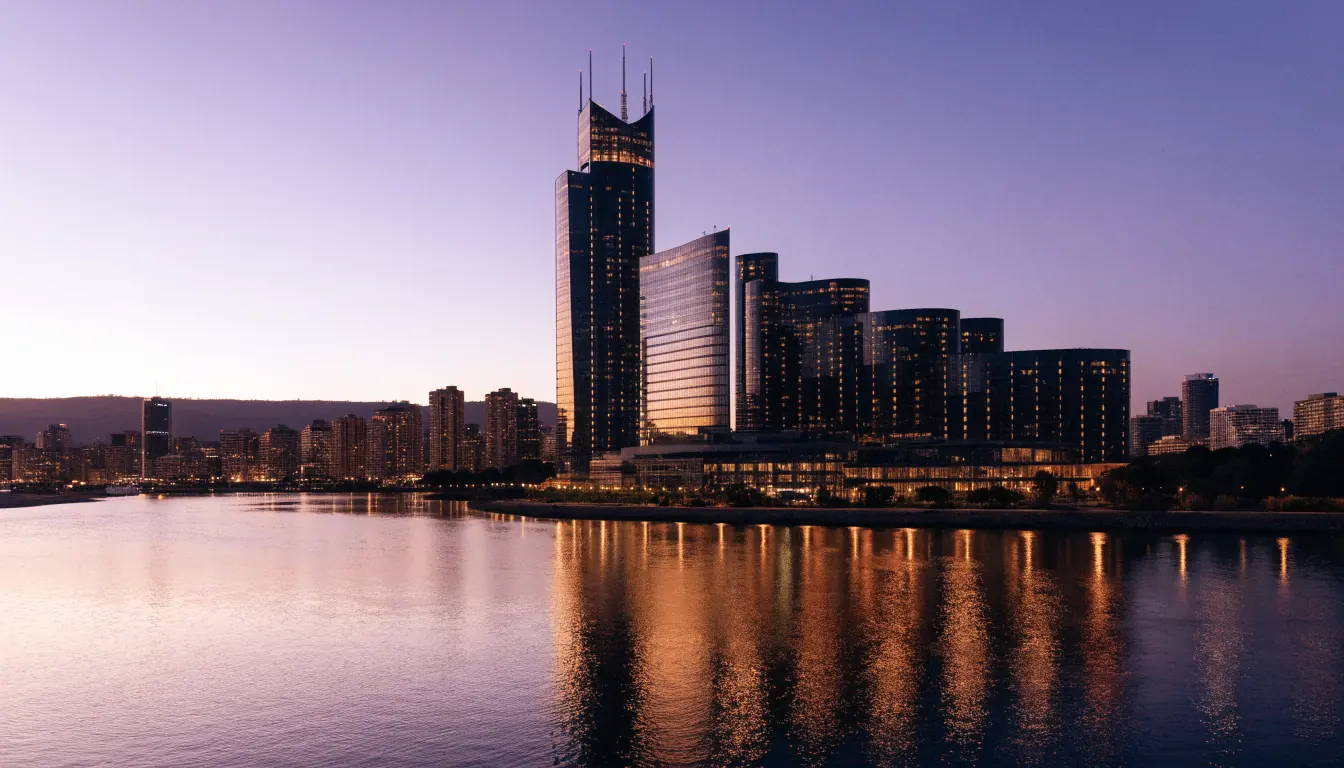
A Melbourne Casino Stay, Beyond the Gaming Floor
A hotel room attached to a casino changes the shape of an evening. The visit is no longer measured only by time at a table or in front of the Electronic Gaming Machines; it becomes a stay, with a threshold between the public spectacle below and the quieter routines of a room upstairs. That promise helps explain the appeal of a Melbourne casino hotel: accommodation appears to make the venue a destination in its own right.
The idea of a resort rests on more than a bed. It gathers leisure under one roof and gives a night out the outline of a short escape. Yet the word can suggest a complete world, when what it really describes is an arrangement: a hotel connected to a larger entertainment setting. The room remains a room, and the value of staying there depends on what matters to the person booking it—proximity to the venue, a particular level of comfort, or the ease of ending the evening without changing locations.
Top operators
Choosing a casino for Melbourne means checking the available details against what matters to you, rather than relying on a headline alone. This list offers a concise reference to help you review the options.
-
7Bit Casino
- License
- Curacao, operated by Dama N.V.
7Bit Casino is operated by Dama N.V. and holds a Curacao licence.
-
Golden Pokies
- License
- Curacao
Golden Pokies is listed with a Curacao licence.
-
Rollero Casino
- License
- Curacao Gaming Control Board OGL/2023/176/0095 (Hollycorn N.V.)
Rollero Casino holds Curacao Gaming Control Board licence OGL/2023/176/0095 and is operated by Hollycorn N.V.
-
GoldenCrown
- License
- Curacao Gaming Control Board OGL/2023/176/0095 (Hollycorn N.V.)
GoldenCrown holds Curacao Gaming Control Board licence OGL/2023/176/0095 and is operated by Hollycorn N.V.
-
Ricky Casino
- Payout speed
- crypto under 1 hour, PayID 1-3 business days
- Min. deposit
- A$20 (A$30 to qualify for the bonus)
Ricky Casino lists crypto withdrawals as taking under an hour and PayID withdrawals as taking 1–3 business days. The minimum deposit is A$20, or A$30 to qualify for the bonus.
-
Thor Casino
- License
- Curacao – Antillephone N.V. (Versus Odds B.V.)
- Min. deposit
- EUR 20
Thor Casino is licensed in Curacao by Antillephone N.V. (Versus Odds B.V.). Its stated minimum deposit is EUR 20.
-
MrPacho
- Payout speed
- crypto 30-120 minutes, fiat 24-72 hours
- Min. deposit
- A$30
MrPacho lists crypto withdrawals at 30–120 minutes and fiat withdrawals at 24–72 hours. Its minimum deposit is A$30.
-
SkyCrown
- License
- Tobique Gaming Commission
- Payout speed
- crypto ~10-15 minutes, fiat 1-5 days
- Min. deposit
- A$30
SkyCrown is licensed by the Tobique Gaming Commission. Its listed payout times are around 10–15 minutes for crypto and 1–5 days for fiat, with a minimum deposit of A$30.
-
Uptown Pokies
- License
- Curacao (operating since 2017)
- Min. deposit
- A$20
Uptown Pokies is listed as operating since 2017 and holds a Curacao licence. Its minimum deposit is A$20.
-
LevelUp Casino
- License
- Curacao eGaming OGL/2023/174/0082 (Dama N.V.)
- Min. deposit
- A$15
LevelUp Casino holds Curacao eGaming licence OGL/2023/174/0082 and is operated by Dama N.V. The minimum deposit is A$15.
That is why hotel rooms deserve attention as more than an afterthought to gaming. A room can provide a private interval in a place designed for public activity. It offers a pause from noise, crowds and the bright insistence of entertainment. The contrast is part of the appeal: a hotel stay takes the casino’s theatrical atmosphere and places ordinary needs—rest, privacy, a morning routine—beside it.
Deals complicate the picture. A lower headline price does not, by itself, say what a stay includes or whether its terms suit a particular visit. Hotel offers can differ in their conditions and inclusions, so the useful comparison is not simply between numbers on a screen. It is between the stay being imagined and the stay actually being sold: the room category, the booking conditions and any extras attached to the offer. A deal is a description, not a verdict.
The phrase “casino hotel” can also blur two different ideas. It may refer to a hotel within a casino complex, or simply to accommodation associated with a casino visit. For a stay on site, the distinction matters because the appeal lies in the connection between room and venue, rather than in a general claim that every hotel nearby belongs to the same resort experience. The building’s relationship to the casino is part of what is being booked.
Hours belong to another part of the calculation, though not to the room itself. A hotel stay has its own rhythm: arrival, rest, departure. A casino’s operating schedule describes the venue, not necessarily the terms or timetable of hotel accommodation. Those are separate questions, even when a single booking is meant to hold the whole evening together. The convenience of one setting should not be mistaken for a single set of rules.
There is a small social history in this arrangement. Casinos turn leisure into an event; hotels make that event last beyond its central attraction. The room gives the occasion a softer edge, while the wider complex keeps the performance close at hand. For some, that combination is the point. For others, it is an expensive way to avoid drawing a line between entertainment and rest. Both readings fit the same architecture.
A Melbourne casino stay, then, is best understood as a particular kind of city break: accommodation shaped by its place inside a larger leisure setting. Its appeal lies in the possibility of moving from spectacle to privacy without leaving the same destination. Whether a room or offer delivers the right version of that experience depends on its own details, not on the word “resort” printed beside it.
Useful distinctions are modest ones. A room is not a package; a hotel is not automatically a resort; and a late evening does not make every detail of a stay self-explanatory. The attraction is real enough. So are the terms.
Poker Rooms, Tournaments and the Limits of What Is Known
Poker invites a different kind of attention from the games built around a single concealed outcome. Its appeal lies partly in the interval between decisions: a hand is dealt, a wager changes the shape of the table, and each player tries to read what the others have chosen not to show. That social theatre explains why searches for poker at a Melbourne casino often turn quickly to rooms and tournaments. It does not, by itself, establish what is currently offered at a particular venue.
A “poker room” sounds definite: a named space, a regular schedule, perhaps a place set apart from the wider gaming floor. Yet the phrase can be used loosely, and a search result cannot settle whether it refers to a dedicated room, a temporary arrangement or simply poker played on site. The distinction matters. A venue’s layout and activity can change, while a familiar label may linger in old listings long after the practical details have moved on.
Tournaments bring another layer of uncertainty. The word promises a structured contest, but says little about its format, entry conditions, schedule or whether a particular event is taking place. Those details are not decorative. They determine whether an event is suitable for a player and whether it is happening at all. A dated announcement, copied calendar entry or discussion thread can give a confident impression without answering the present-tense question.

There is no need to turn that uncertainty into an invented timetable. A current venue notice is the appropriate place to confirm whether poker is available and whether tournaments are scheduled. The same applies to practical questions about registration and participation: these belong to the event’s own published terms, not to assumptions drawn from the word “tournament”.
The phrase “casino rooms” is more ambiguous still. In one context it means hotel accommodation; in another, it may mean rooms or areas within the venue. Here, the interest is in spaces connected with play, not a room for the night. Search wording does not resolve that ambiguity. Nor does it establish that a particular poker facility has a separate entrance, a particular seating arrangement or a fixed operating pattern.
Other searches bring in a sports bar or a gym, as if every large entertainment venue were a catalogue of adjoining facilities. The vocabulary is easy to assemble; the evidence is less obliging. A sports bar is a distinct venue feature, not a synonym for a poker room, and a gym is a separate amenity altogether. Neither should be inferred from the presence of casino gaming, or from a listing that simply places several attractions under one heading.
Even “open today” and “open now” need careful interpretation. A venue may be open while a particular room, activity or event is not operating. General opening information cannot answer every question about a specific facility. Current notices matter because schedules and access arrangements are the sort of details that can change without changing the venue’s name.
Poker has always depended on information: what is visible, what is withheld, and what can only be learned by asking the right question. For a Melbourne visit, the useful distinction is between the existence of a casino and the current availability of a particular poker room or tournament. The latter calls for direct, up-to-date confirmation. Search wording is not a seating chart.
Do
- Confirm poker availability via current venue notices
- Check official event terms for tournament registration
- Use current notices for operating schedules
Don't
- Assume a "poker room" label guarantees a dedicated space
- Rely on dated announcements for tournament schedules
- Infer facility availability from general venue opening hours
The Online Casino Question Has a Different Answer
A Melbourne casino can be a physical destination, but that does not make an online casino bearing the city’s name its digital counterpart. Under the Interactive Gambling Act 2001, operators based in Australia cannot offer real-money online casino games to people in Australia. Pokies, blackjack and roulette fall within that restriction. The distinction is about the service and where it is provided, not the familiarity of a brand or the wording on a website.
That is why an online casino presented as Australian-run is not simply a local version of a venue. A business cannot lawfully offer those casino games online to people physically in Australia just because it has a domestic identity. Sports betting sits under a different set of rules; it does not turn online casino games into an authorised service.
Offshore platforms occupy a less tidy position. Australian players are not criminally liable merely for using one, but an offshore operator is not regulated under Australian law. That leaves a gap between access and protection: the ability to encounter a service does not mean Australian consumer safeguards supervise it, or that local dispute processes can resolve a complaint. If an operator fails, winnings may not be protected, and options for pursuing a dispute can be limited. A familiar-looking site is not a local regulator.
Access can also be affected by location controls. Casinos and software providers may use an IP address to estimate where a player is, then block access to games or services in excluded countries. A blocked game may simply disappear from a lobby or fail to load; neither outcome proves a technical fault. A VPN can make a connection appear to come from elsewhere, but using one to reach region-blocked pokies sites breaches the site’s terms and may lead to account suspension. It is not a dependable workaround. A thin disguise.
The phrase “best casino in Melbourne” therefore needs a little sorting before it can mean anything useful. For a physical visit, it points to a venue and its on-site experience. For online play, it can point towards offshore services that are not regulated here, while Australian-run online casino services are prohibited from offering those games domestically. The shared label conceals a sharp legal divide.
The same distinction applies to searches that combine online play with bingo or dining. A restaurant booking and a real-money online game are different services, subject to different questions; the existence of one says nothing about the legality or availability of the other. Casino dining belongs to the physical venue. An online casino label does not establish that a local service exists.
Parking is another separate matter. Searches for Melbourne casino parking, valet service or free parking concern the practical arrangements for a visit, not online gambling law. Those details can change and should be confirmed through the venue’s current official information before setting out. A city name in an online casino listing cannot answer them.
The broad lesson is not that every offshore site is identical, but that Australian law draws a boundary around who may provide online casino games to people in the country. The boundary does not make an offshore platform a protected local service. Access, legality for the operator and protection for the player are different things.
Accommodation Around the Casino
A stay near Melbourne’s casino is a different calculation from booking a room inside it. The casino is the reason for choosing the neighbourhood; the accommodation is a separate decision, with its own price, terms and atmosphere. Keeping those choices distinct makes it easier to compare places on their merits rather than treating proximity as a promise of convenience.
“Near” can mean different things in a city. A listing may describe itself as close to the casino while leaving the actual distance and route unclear. Map views help establish the relationship, but the final comparison should use the address and the journey shown from that exact property. A hotel’s own description is useful as a starting point, not a measurement. The words “steps away” have a long and elastic life in travel advertising.
The same care applies to accommodation deals. A low headline rate is not necessarily the lowest total cost once the booking conditions are read. Cancellation rules, payment timing and what is included can alter the value of an offer. A non-refundable booking may look attractive until plans change; a flexible rate may cost more while buying the option to reconsider. Neither is automatically the better choice. The difference is whether the terms fit the trip.

Dates matter, too. Rates can move with demand, and a promotion available for one stay may not apply to another. Comparing the same dates across several properties is more useful than comparing a sequence of unrelated headline prices. Any offer should be checked at the point of booking, where the final rate and conditions are displayed. “Deal” is a description, not a guarantee of savings.
For a casino visit, location is only one part of the stay. Some guests may prefer to be close to the venue and spend little time elsewhere; others may want a base that makes the rest of Melbourne part of the trip. Those preferences lead to different definitions of a good location. A room beside the destination can reduce one kind of friction, while a broader city stay may suit a longer itinerary. The best fit depends on what the visit is meant to contain.
Parking deserves its own line in the comparison rather than an assumption attached to a nearby booking. A property’s parking arrangements and any associated charges should be confirmed with the accommodation provider. The same applies to access conditions and availability. A map pin does not establish that a space will be waiting.
Gaming machines and poker machines may be part of the reason for choosing the casino as a destination, but they do not determine where an overnight stay should be booked. Nor should accommodation searches be confused with the venue’s trading hours: those are separate details to confirm through current official information before making plans.
The surrounding stay is best treated as a small piece of city planning. Compare the real address, the full booking terms and the needs of the visit, then decide whether proximity earns its place in the budget. Nearby is not the same as included.
Contact Details, Bars and the Evening Calendar
A casino visit often begins with a practical question: where to find the venue’s current contact details, a map, or information about an evening event. Those details can change, so an old directory listing or a third-party event page may be less useful than the casino’s own current channels. A map is most valuable when it clarifies entrances and the relationship between different parts of a large venue; a phone number matters when a question cannot be settled by published information.
That is not glamorous, but it is how an evening acquires its shape. A bar can be a meeting point before a show, a pause between activities, or simply the place where people wait for the rest of a party to arrive. The phrase “casino bar” suggests one clear destination; a large entertainment venue may have several, with different moods and roles. Without current venue information, naming a particular bar or describing its hours would be guesswork.
Concert plans bring a similar need for current detail. Event listings can establish what is scheduled, while the venue’s own notices are the sensible place to confirm timing, entry arrangements and any changes. A casino’s public life is not only the spectacle of an event: it is also the small choreography around it, from meeting companions to finding the right entrance. The calendar is part of the venue, not an incidental decoration.
The same caution applies to table-game terms that sometimes appear beside searches for bars and entertainment. Baccarat and craps are recognisable casino games, but their presence in a search phrase does not establish what is currently offered at a particular venue, where it is played, or under what conditions. A name in a search box is not a floor plan. For details about a specific game, current venue information is more reliable than inference from the casino’s general identity.

Parking belongs to the same category of practical questions. A car park may be a key part of planning an evening, but search wording alone cannot establish its location, access arrangements, availability or cost. Those particulars should be checked through current official information before setting a route or timing. A map can help orient a visitor, but it should not be mistaken for confirmation that a particular facility is open or suitable for a particular trip.
Contact information, maps, event listings and facility details serve different purposes, even when they sit under one broad heading. A useful order is to confirm the event first, check the venue’s current access and contact information next, then settle the transport plan. It is a modest sequence, not a grand theory. Still, it keeps an evening from being built around details that may have changed.
The appeal of a casino’s public spaces lies partly in their in-between character: neither the private quiet of a hotel room nor the concentrated attention of a gaming table, but the shared, slightly theatrical hours around them. Bars and events give those hours a social frame. The practical details are less romantic, naturally. They are also what make the plan real.
Breakfast, Rewards and Work at the Casino
Breakfast searches often carry a quiet assumption: that a casino hotel’s morning meal is a settled part of the package. It may be a buffet, a separate meal option or something tied to a particular booking; the word “resort” does not settle the question. A Melbourne casino breakfast therefore needs to be understood through its current service details, not inferred from the scale or image of the property. Dining arrangements can change, and a buffet label alone says little about hours, access or what is included.
The distinction matters because “breakfast at the casino” can mean more than one thing. It may refer to a meal for hotel guests, a separately available buffet or simply a search for food before the day begins. Those are different arrangements, not interchangeable promises. A listing should make clear whether the meal is available to non-residents, whether booking conditions apply and whether the advertised format is still operating. Without those particulars, “buffet breakfast” is an appealing phrase, not a description of a dependable service.
“Resort” works in a similar way. It describes an idea of the visit: accommodation, leisure and hospitality gathered under one roof. It does not, by itself, guarantee a particular breakfast, reward or amenity. The word can make a complex venue sound self-contained, while each part may have its own conditions. A polished label is not a timetable.
Casino rewards programmes add another layer to that promise of an all-in-one destination. Their appeal is recognition: visits and spending may be connected to membership benefits, but the useful question is what the programme actually offers and on what terms. Eligibility, exclusions and the way benefits are earned belong in the details. “Rewards” is not a synonym for savings, and membership should not be treated as proof that a meal or stay will cost less. The attraction is partly practical, partly theatrical: the institution turns returning into a status of its own.
Employment searches belong to a different account of the casino. The venue that presents itself as leisure for visitors is also a workplace, with roles that may sit across hospitality, customer service, operations and administration. A job title can reveal more about the scale of an enterprise than its promotional language does. Yet a general search for casino work cannot establish which vacancies are open, what experience they require or how recruitment is conducted. Those particulars belong to the current vacancy notice, not to the reputation of the building.
Breakfast, rewards and jobs may appear to be unrelated searches. Together they show how a casino is encountered beyond play: as a place to eat in the morning, a system that acknowledges repeat custom, and an employer with its own working life. Each carries a different promise, and each needs to be read on its own terms. No single label does all the work.
Opening Hours, Events and a Changing Casino
Whether Melbourne’s casino is open sounds like a question with a simple answer. In practice, it depends on what “open” means: access to the venue, a particular public event, or a specific service within the complex. Those are not interchangeable. A building can remain part of the city’s evening life while individual offerings change, and a past listing cannot establish what is available now.
The sensible record is the venue’s own current notice for operating status, paired with the listing for the event in question. Dates, entry conditions and cancellations belong to the event listing, not to an old review or a third-party calendar copied forward. This is less glamorous than a promise of constant activity, but it is how a changing place is read accurately.
Events give a casino a public identity beyond its gaming floors. A concert or other gathering brings people into the same large institution for different reasons: some arrive for the programme, others for the surrounding atmosphere, and some simply pass through the city’s night-time economy. The mix can make the venue feel less like a single-purpose destination and more like an indoor district. It can also make general descriptions misleading. “Entertainment” is a category, not a guarantee of what is on tonight.
Development has a similar problem of scale. A proposed change, a construction phase and a completed project are different things, though headlines can flatten them into one continuous story of renewal. For a reader trying to understand how the casino is changing, the useful distinctions are what has been announced, what is under way and what has actually opened. Without those distinctions, “development” can mean almost anything.
Employment belongs to that same public story. A large venue is also a workplace, and changes to its operations may affect the kinds of roles it advertises. A careers page or individual vacancy is a more reliable guide to current recruitment than broad claims about job creation. Hiring is not evidence by itself that every part of the venue is expanding; nor does an old vacancy establish that a position remains available.
Reviews, meanwhile, are snapshots. Their value lies in the dated detail they preserve: what the reviewer encountered, what was running and what the atmosphere felt like at that time. They are weaker as a present-day timetable. Even a sharply written account can become a record of a previous version of the venue.
The same caution applies to menu references that appear in event coverage or general reviews. They may describe a particular occasion rather than a standing offer. For current plans, the official event information and the relevant service listing should be treated separately. A calendar answers what is scheduled; it does not settle every question about access or operations.
A casino changes by announcement, construction, staffing and the steady churn of public events. Its current state is therefore better understood as a set of dated details than as a fixed description. The city keeps moving. So does the venue.
Restaurants as Part of the Casino Visit
A restaurant can change the shape of a casino visit. It gives the evening a purpose beyond the gaming floor: a meal may be the main event, with gambling treated as an optional interval rather than the reason for staying. That distinction matters in Melbourne, where searches for restaurants at the casino can mean either places inside the complex or dining nearby.
Those are not interchangeable categories. A restaurant within a casino is part of the venue’s own environment; one nearby belongs to the surrounding city, with its own setting and terms of entry. A listing that blurs the two may be useful for finding food in the district, but it does not establish that the restaurant is inside the casino. The wording is small. The expectation is not.
Dining also changes the social character of the visit. At a table, conversation can take precedence over the machinery of the floor; a meal can make the casino one stop in a broader evening rather than its whole itinerary. That does not make the setting neutral. The restaurant sits alongside a venue built around gambling, and the transition between the two can feel seamless by design. A pleasant meal and a wagering environment may share a roof without sharing a purpose.
For that reason, restaurant choice is best considered on its own merits: the kind of meal sought, the atmosphere, the menu, and whether the setting suits the occasion. These are ordinary questions, but they resist the shorthand of a single “best” label. A restaurant suited to a celebratory dinner may not suit a quiet conversation; a place chosen for convenience may be less appealing when the meal itself is the point.
The useful distinction is between verified restaurant information and the general impression created by the casino’s scale or reputation. Names, menus, opening times and booking arrangements can change. Current details should be checked through the venue’s own published information before plans are made, especially where a restaurant is being treated as the anchor of the evening. A search result or an old listing can preserve a detail long after the arrangement has changed.
There is also a difference between dining at the casino and dining in Melbourne. The first keeps the evening within the venue’s orbit; the second places it back in the city, where the casino is only one possible destination. Neither choice needs to be dressed up as an upgrade. They offer different kinds of evening.
A restaurant can make a casino visit feel less defined by gambling, but it cannot erase the context around it. The meal remains a meal; the setting remains part of the bargain.
Spa, Dress Codes and the Details of a Visit
A visit is often shaped by small uncertainties: which entrance to use, whether a particular bar is open, what clothing is acceptable, or whether a spa is part of the venue at all. These details can seem secondary beside the gaming floor, but they determine whether an outing feels straightforward or begins with a string of avoidable surprises.

For the Melbourne casino’s address, the safest reference is the venue’s own current contact or location information. Map listings can help with orientation, but an official listing is better for confirming that the destination is the right one before setting out. “Melbourne casino” is an easy phrase to recognise and a less precise one to navigate by; the venue’s formal name and address matter when several places or entrances appear in results.
The same caution applies to questions about bars. A search for bars at the casino does not establish which are operating, what their hours are, or whether entry conditions apply. Venue information is the useful starting point for those particulars. Dress-code expectations also belong in that category: they may depend on the area being visited or the occasion, so a general assumption about what is acceptable can be less reliable than checking the current guidance.
Spa searches carry a different kind of expectation. The word suggests a defined set of treatments and facilities, but a search phrase alone cannot establish what is available on site. Any plan that depends on a spa visit should be based on direct, current venue information rather than on the impression created by a broad listing. Small distinctions matter. A nearby service is not necessarily part of the casino, and a mention in an old directory is not proof that an offering remains available.
Games information is another detail best checked close to the visit. A general description may not reflect what is currently accessible, and a game listing is not a promise that every title or activity will be present. The room, the calendar and the venue’s own notices can change.
Careers are less an aspect of a visit than a question about the institution behind it. For vacancies and application processes, the operator’s official employment information is more dependable than an old advertisement or a third-party listing. A large venue is also a workplace, with roles that extend beyond the public-facing rooms; that fact is ordinary, but it says something about the machinery required to make leisure look effortless.
None of these checks is glamorous. They are the quiet edge of a night out: address, entry expectations, current facilities and the right source for each answer. Details first.
Food on Site, from Quick Bites to the Pool
Food at a casino can mean very different things: a quick meal between activities, a counter-service stop, or a longer restaurant visit. The distinction matters. Someone looking for a food court is not necessarily looking for a booked table, and a broad promise of “dining” does little to answer whether there is somewhere practical to eat without turning the meal into the evening’s main event.
For Melbourne’s casino, those expectations should not be mistaken for a confirmed inventory. A food-court-style option and a pool are separate facilities, each needing current confirmation before they become part of a plan. The word “resort” can encourage assumptions: that a pool is available, that food is close at hand, that the whole day can be spent within one complex. A label is not a floor plan.
The same caution applies to quick bites. Menus, outlets and service arrangements can change, while broad venue descriptions may blur the difference between a café, a counter and a collection of food stalls. Anyone deciding where to eat should check the casino’s current official venue information rather than rely on an old directory entry or a general description. Useful details are concrete: whether the outlet is operating, what style of service it offers, and whether access is open to visitors.
Pool searches carry a similar ambiguity. A pool might belong to a hotel or a particular leisure facility rather than being a general casino amenity; access could depend on the facility’s own arrangements. Without confirmation, it is safer not to build a visit around a swim.
That restraint is less glamorous than the resort image. It is also more useful. Quick food, a food-court setting and a pool are not interchangeable amenities, and each should be checked on its own terms.
How does region blocking work?
Online casinos can use your IP address to estimate your location and block access to games or providers restricted in that region. Blocked games may be absent from the lobby or fail to load.
Which club has the most pokies in NSW?
Club Liverpool has the highest number of operational poker machines among clubs in NSW.
Is there a way around region-blocked pokies?
A VPN can make your digital location appear to be in another country, but it does not change your physical location or the legal and licensing restrictions that may apply.