
What Brisbane venue hours can—and can’t—tell you
Venue schedules offer a starting point, but they do not establish access to every service or answer what conditions apply inside.
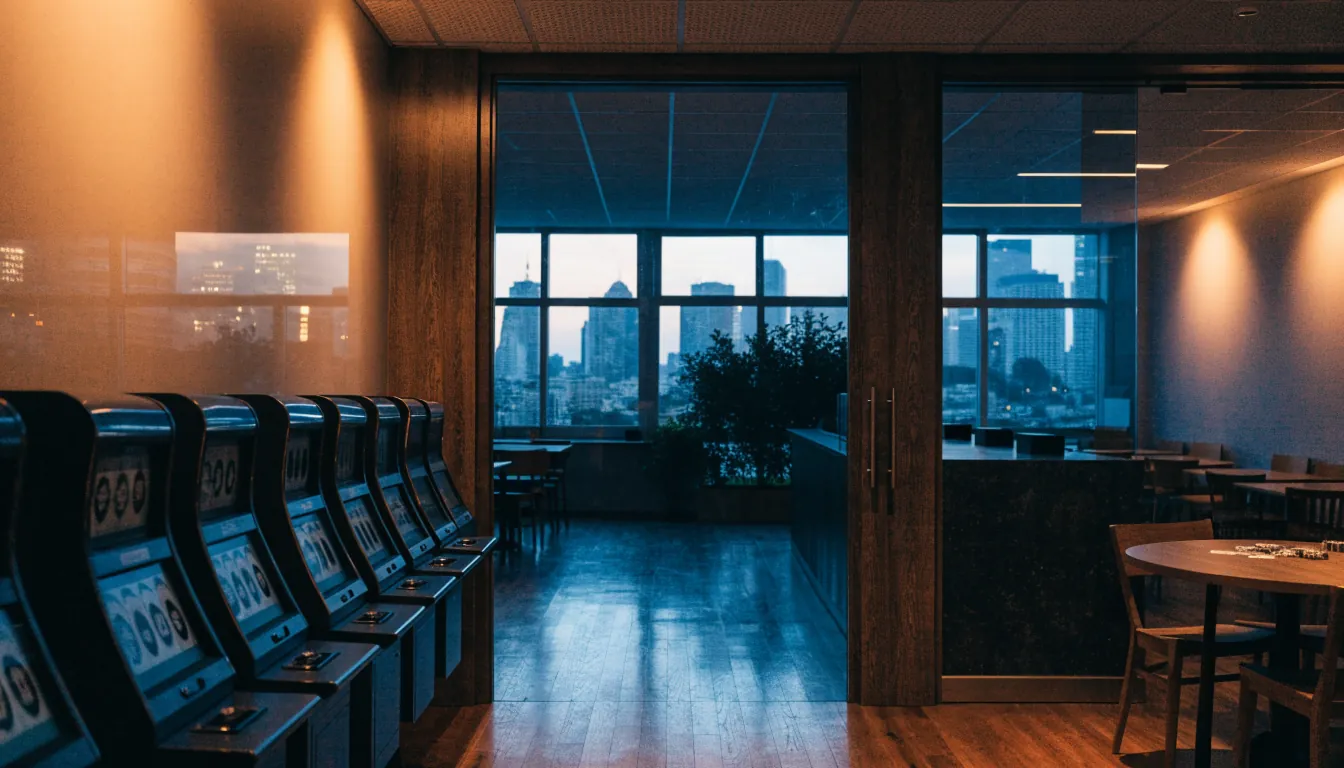
When Brisbane’s Pokies Are Open—and What the Hours Can’t Tell You
Opening hours are a practical question with a local answer. Whether a Brisbane venue is open at a particular moment depends on that venue’s own schedule; the city name alone cannot establish it. Nor does a broad description such as “open late” tell much about access at a specific time. The distinction matters to anyone trying to plan a visit, especially when a listing is brief or its hours are not clearly stated.
A venue’s published hours, where available, describe its stated operating schedule. They are not a promise that every part of the venue, or every service within it, will be available throughout that period. An opening time also says nothing about what conditions may apply once inside. Those are separate questions, and treating them as one can make a simple search seem more conclusive than it is.
There is no single opening schedule that can be assigned to Brisbane pokies as a whole. A city contains different kinds of venues, each with its own arrangements. Without a specific venue and current information about it, no reliable statement can be made about whether it is open now, opens early, or stays open late. A general answer that names a time would turn a local detail into an invented city-wide rule.
Top operators
Choosing an online pokies option for Brisbane in 2026 is easier when you can quickly check the operator details that are available. Use these brief notes as a starting point, and confirm the terms that matter to you before signing up.
-
7Bit Casino
- License
- Curacao, operated by Dama N.V.
7Bit Casino is licensed in Curacao and operated by Dama N.V. Those are the main operator details provided for this listing.
-
Golden Pokies
- License
- Curacao
Golden Pokies is listed with a Curacao licence. No further operator details were provided.
-
Rollero Casino
- License
- Curacao Gaming Control Board OGL/2023/176/0095 (Hollycorn N.V.)
Rollero Casino holds Curacao Gaming Control Board licence OGL/2023/176/0095, with Hollycorn N.V. named as the operator.
-
GoldenCrown
- License
- Curacao Gaming Control Board OGL/2023/176/0095 (Hollycorn N.V.)
GoldenCrown holds Curacao Gaming Control Board licence OGL/2023/176/0095, with Hollycorn N.V. named as the operator.
-
Ricky Casino
- Payout speed
- crypto under 1 hour, PayID 1-3 business days
- Min. deposit
- A$20 (A$30 to qualify for the bonus)
Ricky Casino lists crypto payouts in under an hour and PayID payouts in 1–3 business days. Its minimum deposit is A$20, or A$30 to qualify for the bonus.
-
Thor Casino
- License
- Curacao – Antillephone N.V. (Versus Odds B.V.)
- Min. deposit
- EUR 20
Thor Casino is licensed in Curacao by Antillephone N.V., with Versus Odds B.V. identified as the operator. Its minimum deposit is EUR 20.
-
MrPacho
- Payout speed
- crypto 30-120 minutes, fiat 24-72 hours
- Min. deposit
- A$30
MrPacho lists crypto payouts of 30–120 minutes and fiat payouts of 24–72 hours. The minimum deposit is A$30.
-
SkyCrown
- License
- Tobique Gaming Commission
- Payout speed
- crypto ~10-15 minutes, fiat 1-5 days
- Min. deposit
- A$30
SkyCrown is licensed by the Tobique Gaming Commission. Its listed payout times are about 10–15 minutes for crypto and 1–5 days for fiat, with a A$30 minimum deposit.
-
Uptown Pokies
- License
- Curacao (operating since 2017)
- Min. deposit
- A$20
Uptown Pokies is listed as operating since 2017 and holding a Curacao licence. Its minimum deposit is A$20.
-
LevelUp Casino
- License
- Curacao eGaming OGL/2023/174/0082 (Dama N.V.)
- Min. deposit
- A$15
LevelUp Casino holds Curacao eGaming licence OGL/2023/174/0082, with Dama N.V. named as the operator. Its minimum deposit is A$15.
That is a modest limitation, but a useful one. A page that says “open now” may appear definitive while leaving the essential detail unresolved: open where? Hours are attached to a particular place, not to the broad category of pokies. The more precise the intended visit, the more important that distinction becomes.
Hours and safeguards are different things
Operating hours describe when a venue says it is open. Responsible-gambling measures address a different part of the experience: how gambling is bounded and how people can manage their participation. Deposit limits, loss limits and session time limits are tools that can place boundaries around spending or time. Self-exclusion offers another kind of boundary by allowing a person to exclude themselves from gambling.
None of those safeguards establishes a venue’s opening time. Equally, an open door does not answer whether a person has set limits or chosen to exclude themselves. The two subjects belong in the same conversation about gambling, but they should not be confused. A schedule is an operational detail; a limit is a protective measure.
That separation matters because opening hours can dominate the practical question. A person may be thinking only about whether a venue is available, while the larger context of gambling recedes. Yet access and protection are not opposites, and neither one substitutes for the other. The fact that a venue is open, if it is, does not make gambling harmless. A safeguard does not turn a schedule into a recommendation.
The language of availability can also sound reassuring. “Open” is a plain word, but it carries no information about the likely experience, the cost of gambling, or a person’s ability to stop. It is a statement about access alone. That is all.
A timetable is not a payout guide
Opening hours cannot establish a pokie’s payout percentage. A venue’s schedule is not evidence about the machines it may have, their settings, or the outcome of any particular play. Those are distinct matters. The time a place opens or closes supplies no basis for estimating how much a pokie might return.
This is worth keeping separate from the phrase “payout percentage,” which can sound like a straightforward local fact. It is not something that can be read from a venue timetable. Nor does a time of day, by itself, tell anything about the chance of a particular result. Availability and outcomes are different questions.
So a search for Brisbane pokies open now has a narrow answer: the relevant detail is venue-specific. A city-wide opening time cannot stand in for it. Early and late access are also matters for the individual venue, not characteristics that can be safely inferred from the word “Brisbane.” Where hours are unclear, certainty should not be manufactured to fill the gap.
Gambling has always depended on a curious pairing: access is organised by places and schedules, while the reasons people play are private and varied. The timetable belongs to the venue. The safeguards belong to the choices and circumstances around gambling. Neither tells the whole story, and an opening hour tells very little beyond itself.
Brisbane Pokies and the Limits of “Best”
“Best” sounds like a promise of comparison: a room full of machines, a set of measurable qualities, then a winner. But the phrase can blur two different things. Pokies in a physical venue belong to the land-based setting; real-money pokies played through a website belong to online gambling law. A Brisbane address in a page title does not make those categories interchangeable.
The Interactive Gambling Act 2001 draws a hard line around online casino services. Companies cannot legally provide real-money online pokies to people in Australia without a domestic licence. None has been issued, and there is no Australian-licensed online casino. That leaves no licensed online market in which a local ranking of online pokies could sensibly be made. A list styled as “the best paying” would imply evidence and legitimacy that the label itself cannot supply.
A machine in a venue is another matter. The legal distinction is not a verdict on which machine pays more, nor does it establish that a particular Brisbane casino, club or city venue has pokies. It simply means that a physical machine and an online casino game are not the same service under the law. Geography cannot turn one into the other. Brisbane, the CBD and the word “casino” in a description do not settle the question of what is actually offered.
The word “best” also hides the measure being used. Best for whom, and by what test? A venue might be judged by location or atmosphere; an online game might be described in terms of its mechanics or advertised return. Those are different comparisons, and none follows automatically from a search for Brisbane pokies. In particular, “best paying” is not a dependable promise of a payout. A ranking needs a defined basis and evidence, not a confident adjective.

The law’s target matters here. It is the company offering the prohibited online service, not the individual player. Australians may legally play on offshore sites that choose to accept them; that does not create an Australian licence for those sites or make their operators lawful. Nor does the fact that a site opens on a screen amount to regulatory approval. Accessibility and legal status are separate questions, an awkward distinction in a business built to make every click feel like an invitation.
That distinction has a practical edge. If an offshore casino refuses to pay winnings, an Australian player has no legal recourse in Australia. The possibility of playing is therefore not the same as having a domestic authority or court available to resolve a dispute. A site may present polished terms and familiar payment language, but those features do not supply the protections that a local licensing system would provide. There is no Australian online casino licence behind them.
This is why a ranking of “best pokies in Brisbane” cannot responsibly combine land-based machines with online games, then treat the result as a single local guide. The phrase can refer to a venue search, a request about machines, or a wish to find an online game associated with the city. Each points toward a different question. The law answers one of them clearly: companies have no domestic licence to offer real-money online pokies to Australians.
A search for the best paying pokies in Brisbane may sound like a request for a simple table. Yet a table would have to say what was being compared and where the comparison came from. Without that, the ranking would be decoration masquerading as measurement. “Best” is easy to print. Evidence is less accommodating.
Online Play, Maximum Bets and What a Spin Can Promise
A larger stake can make a win feel more consequential. It cannot make the next spin more likely to land in a particular way. Each pokie spin is an independent event generated by a Random Number Generator (RNG); the result of one spin does not set up, reward or correct the next. A run of losses is not evidence that a win is due, just as a recent win does not make another one more likely.
That distinction matters when “maximum bet” is treated as a strategy rather than a setting. Raising a stake changes how much is committed to each spin and how large a possible result may be under the game’s rules. It does not give the player control over the RNG. The machine has no memory in the human sense, and no obligation to balance a session.
The same caution applies to claims about a pokie’s return to player, or RTP. RTP is a percentage describing an expected return across a very large number of plays, not a promise about the outcome of a particular session. A figure displayed beside a game may sound precise while saying little about what will happen in the next few minutes—or to one person’s balance.
There is another complication: a specialist review has reported that some providers allow casinos to choose between more than one RTP setting for the same pokie. The game’s name, artwork and features may therefore remain unchanged while its configured return differs between casinos. A percentage attached to a title is not automatically a universal property of that title.
This makes “best-paying” a slippery label. It might refer to a published RTP setting, but that figure alone cannot establish that a game will pay a particular player, or that the same setting applies wherever the game appears. Nor does a high stated return guarantee a favourable short session. The maths describes a long horizon; people experience individual spins. Those are different scales of time, and the gap between them is where certainty tends to be advertised.
Requests for online pokies associated with Brisbane, or for options near the city centre, also mix two different ideas: a game accessible online and a machine located at a local venue. One does not establish the other. “Cashless” describes a way of handling payment, not a measure of a pokie’s odds, fairness or return setting. A payment method cannot turn a random outcome into a predictable one.
The same applies to searches for high-limit play. A maximum stake is a ceiling on what can be wagered per spin, not a sign that the game is more generous. A person may choose a larger stake, but the RNG still determines each result independently. Larger exposure, not greater influence.
Online casino-style games are prohibited services when operators provide them to people in Australia under the Interactive Gambling Act 2001. That boundary is not softened by a familiar game title, a Brisbane reference or a claim about RTP. A percentage can describe a setting. It cannot promise a result.
Pokies Venues and the Duties That Come with Them
A venue is more than the room in which pokies sit. It is also a place where staff may see a customer’s behaviour change over the course of a session, and where someone must decide what to do with that observation. Rules about responsible gambling officers and incident records make that duty more explicit: attention to possible harm is part of the venue’s operation, not merely a matter of individual concern.
A report by regionriverina.com.au describes a requirement applying from 1 July to venues with more than 20 gaming machines: a dedicated responsible gambling officer (RGO) must be on duty whenever those machines are operating. The distinction is practical. The officer’s presence is tied to machine operation, rather than simply to a venue’s general opening hours. The threshold also means the requirement described in the report does not apply to every venue on the same terms.
The report describes a one-month grace period for venues to remove signage and put the RGO arrangements in place. A transition period has a modest, unglamorous purpose: it gives venues time to alter what is displayed and organise staffing, rather than treating a new obligation as if it could be fulfilled by a notice on a wall. Compliance, after all, requires a person on duty.

The same account says venues will have to maintain a gambling incident register. It is intended to capture details of occurrences, including cases where a patron’s behaviour suggests they may be at risk of gambling harm or already affected by it. A register turns an encounter that might otherwise remain an informal exchange into a record the venue is expected to keep. That can make patterns more visible, while also placing weight on staff judgement: a record begins with someone noticing that a situation has changed.
For people comparing Brisbane pokies venues, these obligations offer a more grounded point of distinction than the word “best”. A venue’s reputation, decor or convenient location cannot establish how its staff respond when gambling appears to be causing harm. Nor does the presence of an RGO, on its own, say what will happen in every individual interaction. It does, however, describe a defined role connected to machine operation at venues above the stated threshold.
The incident register matters for a related reason. Safeguards are often easiest to praise in the abstract and hardest to see in practice. A formal record asks a venue to retain more than a general impression that staff are attentive; it creates a process for documenting certain events. Paperwork is not compassion. But without a record, concern can disappear with the shift.
These duties concern venue practice, not a ranking of Brisbane rooms or a promise about any particular venue. They place responsibility on the business to have an officer present where the requirement applies and to document gambling-related incidents. The small print has a human subject.
Deposits, Bonuses and the Cost of Getting Money Back
A payment method answers how money moves; it says nothing about whether the service receiving it is lawful in Australia. PayID, for instance, is an alias-based way to send a bank transfer through the New Payments Platform. The alias can be an email address, mobile number or ABN. Using it for real-money play at an online casino would require linking it to a bank account first. None of that makes a gambling operator licensed or gives a player protection if a payment dispute arises.
Access to PayID is not guaranteed either. A specialist review has reported that some Australian banks, including the Big Four, sometimes block PayID transfers to gambling merchants they recognise. Payment arrangements can change, and a successful transfer is not evidence of fairness, licensing or a dependable route to getting money back.
Bonuses have their own arithmetic. A wagering requirement multiplies the amount that must be bet before bonus-related funds can be withdrawn. One specialist review advises treating a requirement of 35x or less as a point of comparison and describes anything above 40x as punishing; these are that review’s judgements, not a universal standard. At 40x, a $500 bonus entails $20,000 in required bets. If the requirement applies to a $500 deposit plus a $500 bonus at 35x, the turnover becomes $35,000. The headline offer is the small print’s opening act.
“No deposit” and free-spin offers are not necessarily money that can be withdrawn without conditions. A specialist review notes that free-spin winnings may be subject to a cash-out cap. The relevant terms determine what counts towards wagering, which games qualify, and whether a cap limits the amount payable. A large advertised figure can therefore have little relation to the sum eventually available to withdraw.
Withdrawal rules matter independently of bonus terms. A specialist review reports that some casinos set weekly or monthly withdrawal ceilings of $5,000–$10,000; a $50,000 jackpot under such a ceiling could be paid in instalments over years. That is not a promise of payment, merely a description of how a cap can stretch the timetable. Fees, processing conditions and the operator’s ability to honour a balance remain separate questions.

Identity checks can also stand between a displayed balance and a withdrawal. Specialist reviews report that casinos commonly request verification before a first cash-out. Documents may include proof of identity and address, with some operators also asking for a selfie holding identification. These checks should be understood as a condition to examine before depositing, not as proof that the operator is trustworthy. A player in Australia has no Australian legal recourse if an offshore casino refuses to pay winnings.
The cost of getting money back is not only a fee. It can be delay, unmet conditions, a capped payment—or no effective remedy at all.
Finding Pokies Near Brisbane’s Airport and Beyond
A request for pokies near Brisbane Airport is a question about a specific area, not simply about Brisbane. “Near the airport” and “inside the airport” describe different locations; neither phrase establishes that a venue is there. The same applies to broad descriptions such as “Brisbane pokies”: a city label cannot show how close a place is to a terminal, a central address or any other landmark.
That distinction matters because location language can sound more precise than it is. A venue associated with Brisbane might be somewhere in the wider region, while a result mentioning the airport might merely use it as a point of reference. Without a confirmed venue address, proximity to the airport cannot be stated as fact. Nor can an airport location be inferred from the wording of a listing.
The city-and-state distinction deserves care, too. A request for Brisbane in Victoria is not interchangeable with one for Brisbane in Queensland. Place names travel; search results can gather them under a familiar word while quietly changing the geography. The label is not the location.
A more reliable location check starts with the full street address, then compares that address with the landmark in question. A map pin or a phrase such as “close to” is not a substitute for a clear address: pins can be misplaced, and promotional descriptions do not define distance. For airport access in particular, “near” may mean very different things depending on whether the starting point is a terminal, an airport boundary or a wider transport area.

The same discipline applies to searches for pokies near the Brisbane CBD. “Brisbane” alone does not establish that a venue is central, and “near the CBD” is not a precise boundary. A location claim should be tied to an identifiable address rather than inferred from a city name or a broad neighbourhood label.
There is a broader habit at work here. Australian place names often serve both as practical directions and as shorthand for a region; online listings can make the shorthand look like a measured distance. But geography is not a mood. A familiar landmark in a description does not prove that the venue sits beside it.
For searches around Brisbane Airport, in the CBD or elsewhere in the city, the soundest conclusion is modest: a specific venue’s proximity needs a verified location before it can be described. Without that, “near” remains an impression, not a fact.
Pokies Hours and the Meaning of ‘24 Hour’
“Open around the clock” sounds like a simple promise: arrive at any hour and the machines will be operating. In practice, the phrase can blur two different things—the hours a venue admits patrons and the hours its pokies are available. Neither can be inferred from the other. A venue may have its own operating schedule, while machine availability can be governed separately.
That distinction matters because a late-night search often treats a venue as though it were a switch: open or shut, with every service inside following the same timetable. But hours belong to particular premises and their arrangements, not to Brisbane as a whole. A label suggesting continuous access is not, by itself, a reliable account of what will be available at a given moment.
There is also a rule about what must happen while machines are running. A report published by regionriverina.com.au says that, from 1 July, venues operating more than 20 gaming machines are required to have a dedicated Responsible gambling officer (RGO) on duty during machine operation. The condition is tied to the machines being in use, not simply to a building being open. It says nothing about whether a Brisbane venue operates overnight, or whether its machines are available whenever its doors are.
Responsible Gambling Officer (RGO) Requirements
A report by regionriverina.com.au states that from 1 July, venues operating more than 20 gaming machines must have a dedicated RGO on duty whenever those machines are operating.
That is the useful boundary. The presence of an RGO requirement does not certify a venue’s hours; a claim of 24-hour access does not establish whether the requirement applies to that venue. The rule described in the report concerns venues above the stated machine threshold, and the officer’s duty is linked to operating machines. It is a safeguard attached to the activity, not a timetable.
The phrase “24 hour” can therefore carry more certainty than it deserves. It sounds like a settled fact about access, though the actual answer rests with the individual venue and its current arrangements. A search result, directory label or old listing may preserve a claim long after operating details change. The clock, as ever, is less complicated than the institution.
For Brisbane, the distinction is especially useful: a general statement about responsible gambling duties cannot tell anyone which venue is open at a particular hour. Nor does a venue’s being open prove that its pokies are operating. Those are separate questions, and a single label cannot settle both.
A rule for operating machines is not an opening-hours notice. A phrase promising access at every hour is not one either. Dry distinction; practical consequence.
South Brisbane, South Bank and the Geography of the Search
South Brisbane and South Bank are often treated as if a shared name settled the question of where one neighbourhood ends and another begins. It does not. A place-name can narrow a search, but it cannot establish which venues operate there, whether they have pokies, or what machines they offer. Those are separate claims, and a map label is not evidence for them.
The same caution applies when the search widens to Brisbane’s north side. “Northside” is a broad description, not a precise address. Without confirmed venue details, there is no sound basis for drawing a local machine map or comparing one side of the city with another. Geography offers a starting point. It does not supply the missing particulars.
This is less a technical problem than a familiar urban one. Cities are organised in overlapping names: suburbs, precincts, commercial areas and the labels used by residents. South Brisbane and South Bank may appear together in everyday descriptions, but that does not make them interchangeable when a specific venue is at issue. Nor does a general reference to Brisbane resolve a question about a particular district.
A request about the maximum cash payout from a pokie raises a different kind of uncertainty. The name of a suburb cannot answer it. A payout figure would need to be tied to the particular machine and its applicable rules; assigning one figure to South Brisbane, South Bank or the north side would suggest a neighbourhood-wide standard without grounds for doing so. A postcode is not a payout schedule.
That distinction matters because search language compresses several questions into a few words: where a venue is, whether it has pokies, and what a machine might pay. Each needs its own evidence. Combining them does not make any one of them more certain.
The careful approach is modest. Treat South Brisbane, South Bank and Brisbane’s north as location clues, not as confirmed inventories. Treat a maximum payout as a machine-specific matter, not a property of a district. The city may look neatly divided on a screen. The evidence still has to catch up.
Do
- Use full street addresses to verify proximity to landmarks.
- Treat suburb names as location clues rather than confirmed inventories.
- View maximum payouts as machine-specific settings.
Don't
- Infer a venue's location from a broad neighbourhood label.
- Assume a neighbourhood-wide standard for payouts.
- Use a city name as a substitute for a precise address.
The Brisbane CBD: Venue Rules, Not a Verified Machine Map
A request for pokies in Brisbane’s CBD can sound like a request for a simple list: clubs, machines, perhaps a reason one venue should count as “best”. But a postcode is not a quality measure, and a club’s name or city-centre address does not establish what gambling facilities it has. That boundary matters: naming a club as a pokies venue without evidence would turn a location query into an unsupported recommendation.
The more useful distinction is between a venue’s machines and its duties towards people using them. A report on changes to venue rules says that, from 1 July, premises operating more than 20 machines must have a dedicated Responsible Gambling Officer (RGO) present while those machines are running. This is a staffing obligation attached to a threshold, not a guarantee that every venue has the same layout, services or approach. Nor does it identify which Brisbane CBD clubs fall within the rule.
The same report describes a gambling incident register for recording relevant events, including signs that a patron may be at risk of gambling harm or already affected by it. An incident record makes a response accountable in principle; it does not, by itself, show what help was offered or how a particular venue handled a situation. Paperwork is not care. It can, however, make care less easy to deny.
Self-exclusion belongs to a different part of this picture. It is a responsible-gambling tool, not a directory of venues and not proof that a particular club offers a particular process. In a city-centre search, practical questions about how a venue handles a request may matter more than a claim that one room has “better” machines.
So “best” cannot responsibly be translated into a ranking of Brisbane city venues. Those obligations offer context, not a machine map. A club search may begin with geography; it should not end with an invented address or an assumed standard of care.
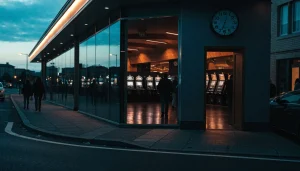
Crown Brisbane Searches and What Can Be Confirmed
A name can gather expectations around it. “Crown Brisbane” may suggest a particular venue, and the word *pokies* may suggest a particular kind of room, but putting those ideas together does not establish that the venue exists in the form imagined or that it offers pokies. The name is not evidence of machines, a gaming area or a particular experience.
That distinction matters because the search phrase “Crown Brisbane casino pokies” sounds like a description, while it is only a request for one. Repeating it as though it confirms the premise would turn an expectation into a claim. The same applies to references to pokies at a Crown casino in Brisbane: the wording cannot prove that such machines are available there.
Nor can a “best pokies room” label settle the question. *Best* requires something to compare, and *room* implies a venue feature. Without substantiation for the underlying details, either description would be more confident than the evidence permits. A polished name does not supply the missing particulars.
There is a wider Australian distinction behind the caution. The Interactive Gambling Act 2001 prohibits operators from providing real-money online casino games, including pokies, to people in Australia. That rule concerns online services; it should not be used to infer what a named physical venue does or does not offer. Different questions require different evidence.
The sensible boundary is narrow. Crown Brisbane can be discussed as a name appearing in a request about pokies, but that alone cannot support claims about machines, rooms or rankings. No specific account of those features follows from the name itself. This is not a verdict for or against a venue; it is a refusal to make the label do the work of proof.
In gambling, as elsewhere, a confident noun can masquerade as a fact. Here, restraint is the more accurate description.
What does a wagering requirement actually mean?
It is the amount you must wager before bonus winnings can be withdrawn, calculated by multiplying the qualifying bonus amount by the stated turnover figure. For example, a 40x requirement on a $500 bonus means $20,000 in bets.
What is the best payment method for fast withdrawals in Australia?
E-wallets such as Skrill and Neteller are popular for their speed. Check the casino’s withdrawal terms, as payment processing and withdrawal limits can affect how quickly you receive funds.
What is the cost-benefit calculation of casino promotions?
Compare the potential benefit with the wagering needed to unlock it: a $500 bonus at 40x requires $20,000 in bets, while a 35x requirement on a $500 deposit plus a $500 bonus requires $35,000. Also check for limits on free-spin winnings and withdrawals.
What is the legal age for online gambling in Australia?
You must be at least 18 years old to gamble online in Australia.