
Separate venue facts from online-pokies claims
A guide to interpreting Sydney pokies searches, comparing physical venues and understanding the limits of online access and promotional claims.

What “Online Pokies Near Sydney” Can—and Cannot—Mean
A search for pokies near Sydney can point to a physical venue: a club, hotel or casino within travelling distance. Add “online”, and the geography changes. A website does not become a Sydney venue because it appears beside local results, uses Australian currency or accepts a payment method familiar to Australians. “Near” describes a place when the subject is a building; applied to a gambling site, it is mostly a matter of presentation.
That distinction matters because the rules are not the same. In New South Wales, pokie machines are found in licensed physical venues. Real-money online pokies, by contrast, are part of a gambling service governed by federal law. Under the Interactive Gambling Act 2001, companies cannot lawfully provide those games to people in Australia without a domestic licence. No such licences have been issued, and Australia has no locally licensed online casino.
The practical effect is not a special Sydney exception. The same restriction applies whether someone is at home, in the city centre or travelling through the airport. A website’s claim to be “for Sydney” does not give it a local venue, a local licence or a different legal standing. A screen can imitate local familiarity with a flag, a city name or Australian terms. None of those details changes who is providing the service.

The Act is directed at operators, rather than making the individual player its enforcement target. Australians may encounter offshore sites that accept them, but that does not make those services locally licensed or lawful for the companies to offer here. Nor does it create a reliable remedy if a dispute arises. If an offshore casino refuses to pay winnings, an Australian player has no legal recourse in Australia against it. That is a substantial difference between a venue one can physically identify and an overseas business whose promises may be difficult to enforce.
The Australian Communications and Media Authority enforces the Act and blocks access to illegal offshore gambling sites; internet service providers must comply with its blocklist. Blocking is part of the regulatory setting, not an assurance that every site will disappear from view or that a site still appearing online has been approved. Search results, advertisements and a functioning page are not licensing evidence. The law’s boundary remains the same even when the internet makes a distant operator look close at hand.
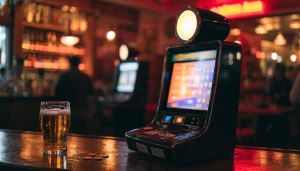
This is why a request for online pokies near Sydney cannot be answered as though it were a map question. A physical “near me” result can refer to distance from the person searching. An online result has no meaningful local distance in that sense. The service may be operated offshore, and its visibility to an Australian user says little about its legal status or the protection available if money is withheld.
The local wording can still carry a legitimate, ordinary meaning: someone may be looking for pokie machines at a venue around Sydney. Searches mentioning the airport, Central or the central business district can also be attempts to locate a building. Those are questions about places, not online access. Their answers depend on the particular venue and its location, not on a website’s claim to serve the city. A pin on a map and a casino page are different things.
The boundary is easy to blur because the same word, “pokies”, covers both a familiar machine in a public venue and a digital game offered through a browser. But the setting changes the governing rules, the operator’s responsibilities and the practical means of resolving a dispute. Calling both experiences local does not make them equivalent.
So “online” and “near Sydney” pull in opposite directions: one describes a remote service, the other suggests a nearby place. The phrase may bring both into the same results page, but it cannot turn an offshore gambling site into a Sydney venue or supply the local protections that do not exist for an Australian-licensed online casino. Close in the wording. Not in the law.
The Hours Behind Sydney’s Pokies Searches
A venue’s opening time is a local fact, not a Sydney-wide custom. A hotel, club or other place with pokies sets its own hours, and those hours may differ from the hours of the wider business. A dining room can be serving customers while a gaming area is closed; a venue can also open its doors before its pokies are available. The distinction matters most in the early morning, when a broad label such as “open” can conceal several different schedules.
Someone looking for pokies available at dawn is therefore asking a narrower question than whether a hotel is open. The useful detail is when the gaming area begins operating, not simply when the building admits customers. A venue’s own current information is the best place to begin, with a direct check where the wording does not make clear whether the stated hours apply to the whole premises or to the gaming area.
That small distinction carries the weight of the search. A late-closing bar is not necessarily a late-operating gaming room, just as a hotel with early service does not establish that its pokies are running. Listings may describe trading hours in broad terms; venue notices may be more specific, but can still leave the gaming area’s schedule unstated. In that case, the honest answer is not to infer a start time from the venue category or its location. It is to treat the information as unresolved.
No city schedule. Just separate doors, separate clocks.
The same care applies to a venue said to stay open late. The closing time of the premises does not, by itself, confirm how long pokies remain available. Nor does a search for a particular early hour establish that any venue operates then. Opening times can change, and an old listing may outlive the schedule it once described. A date attached to a venue’s own notice, or confirmation from the venue, helps distinguish current information from a stale directory entry.

This is not merely a matter of convenience. Opening hours describe when a business makes an activity available; they do not explain the conditions around that activity. A gaming room’s hours are part of how a venue organises its operations, and the people on duty are part of that arrangement. A report by regionriverina.com.au describes a requirement taking effect from 1 July for venues with more than 20 gaming machines to have a dedicated responsible gambling officer on duty while the machines are operating. The report also describes a one-month grace period for removing signage and introducing those officers. That is a staffing and transition rule, not a timetable for any particular Sydney venue.
The practical reading of an early-opening claim is therefore modest: confirm the venue, confirm the gaming area, and confirm that the information is current. A hotel name or an “open” label cannot settle all three. When a listing gives only the business’s general hours, it should not be treated as proof that pokies are available throughout that period.
Sydney’s scale can make an individual schedule seem like a city pattern. It is not. A venue’s hours answer a question about that venue, on that schedule, and nothing more.
Sydney Casino Pokies: What a “Best” Claim Can’t Establish
“Best” sounds like a verdict, but it can conceal several different claims: that a pokie is entertaining, that it pays more often, or that it returns a larger share of wagers over time. Those are not interchangeable measures. A popular game is not necessarily a higher-return one, and a general claim about returns cannot establish what a particular machine is set to pay.
A specialist review reports that some game providers allow casinos to choose between different return-to-player settings for the same pokie. In that case, the title alone does not tell the whole story: one casino’s version may use a different setting from another’s. A figure attached to a game elsewhere cannot safely be treated as the setting at a Sydney casino. The detail that matters is the setting actually in use at that venue.
That makes “best paying” a particularly slippery description. Without a confirmed return setting, a ranking can sound more precise than the information behind it. Even a published return percentage describes a long-run theoretical measure, not a promise about a session or a particular person’s result. It cannot tell anyone what the next spin will do.
Each spin is an independent event determined by a Random Number Generator. Previous results do not make a win due, nor does a recent win establish that the next outcome will be favourable. A machine that has paid several times in a short stretch has not thereby disclosed a pattern that can be relied upon. Randomness is less cinematic than a streak, but it is the point.
The distinction matters when a request for the best pokies in Sydney is read as a demand for a dependable way to win. No game name, venue reputation or run of recent results can establish that. “Best” may remain a personal judgement about themes or pace; as a claim about returns, it needs a specified setting and careful qualification. A headline cannot supply either.

The same caution applies to claims about Sydney casino pokies generally. A statement about one game’s return is not a statement about every machine carrying that title, and a statement about a setting is not a forecast of individual outcomes. The language of rankings turns these separate questions into one neat ladder. The underlying mechanics refuse to cooperate.
There is a social habit behind the appeal of such ladders. Gambling has long been described through stories of systems, hot machines and local knowledge, because a story gives chance a human shape. But the machinery does not remember who played before, and a casino label does not turn probability into certainty. The account that sounds most confident may simply leave out the setting on which its claim depends.
A meaningful description therefore needs to separate preference from evidence. A game can be someone’s favourite without being demonstrably the highest-return choice; a return setting can be documented without predicting a session. For anyone weighing a “best” claim, those are different kinds of information, not competing answers to the same question. More modest, and more honest.
Airport and North Sydney Searches, Without Assumptions
A place name can make a venue sound closer, clearer or more specific than the available information warrants. “Sydney Airport” may mean inside the airport, near its terminals, or somewhere in the surrounding area. North Sydney is a different kind of label: a district rather than a single address. Neither phrase, by itself, establishes that a particular venue is there or what it offers.
That distinction matters because location and facilities are separate claims. A venue’s proximity to an airport does not prove that pokies are available inside the airport complex. Nor does a North Sydney address establish the number or type of machines on site. A name attached to a broad area is not a venue directory.
Do
- Identify the specific premises
- Verify the exact address
- Confirm the venue's own facilities
Don't
- Assume proximity to an airport means onsite access
- Use a district label as a venue directory
- Treat a general area name as a specific address
The same caution applies when the wording shifts from the airport to Sydney city. “City” can be used loosely, while a specific address locates a particular premises. Those are not interchangeable descriptions. Treating them as such risks turning a geographical association into a claim about a venue’s services.
There is a further question hidden in searches about the maximum cash payout from pokies in Sydney. The location does not answer it. A payout claim needs to be tied to the relevant machine and supported by information about that machine; a district or airport label cannot supply the missing detail. A large-sounding figure without that context would be theatre, not useful comparison.
The public obligations attached to gaming venues offer a more concrete, though limited, point of reference. A report by regionriverina.com.au describes a requirement taking effect from 1 July: venues operating more than 20 gaming machines are to have a dedicated Responsible gambling officer (RGO) present while those machines are running. That is a staffing requirement linked to the scale of a venue’s machine operation. It does not identify which venues are near the airport or in North Sydney, and it does not say what any particular venue offers.
The distinction is easy to lose in a compact phrase such as “pokies near the airport.” Search language compresses a map, a venue and a service into a few words. Actual claims need to pull those pieces apart: the premises must be identifiable, its location must be clear, and any statement about its facilities must belong to that premises rather than to the area around it.

North Sydney deserves the same care. A local label can help narrow a map, but it cannot stand in for an address or prove machine availability. And an airport reference can mark a broad destination without locating a gaming room within it. Geography narrows the question. It does not answer it.
This is not a small distinction. Location is observable; what a venue provides is a separate matter. A responsible description keeps those claims separate, especially where a short label might otherwise suggest more certainty than it contains. A map is not an inventory.
Crown Sydney and the Limits of the Available Information
A venue’s name can make a broad search feel unusually specific. “Crown Sydney” points to a place, but it does not by itself establish what pokies are available there, how they are arranged, or what returns apply. Those are separate claims, and a recognisable name cannot fill in the details.
That distinction matters when a search is framed around Crown Sydney’s casino pokies or asks for the best pokies room in Sydney. The wording may suggest that a particular room, selection or advantage has already been identified. It has not. Without venue-specific information to support such claims, a description of Crown Sydney’s games or their returns would amount to guesswork dressed as a review.
The word “best” adds another layer of uncertainty. It can refer to different things: a person may mean the range of games, the atmosphere, a preferred layout or an expected return. Those meanings are not interchangeable, and a claim about one does not prove another. In particular, a venue name alone cannot substantiate a claim about game performance.
There is also a limit to what any statement about a pokie can promise. Each spin is worked out by a random-number generator, so one result does not dictate the next. A run of wins or losses is not evidence that a machine is due to behave differently on a later spin. The machinery offers no memory of a player’s expectations.
That fact does not amount to a venue review. It explains only why anecdotes about particular sessions cannot establish a dependable advantage at a named location. A story about a memorable win may be vivid; it is not a measure of what another person would encounter, or proof of how a particular room performs.
The same caution applies to descriptions that treat “Crown Casino Sydney” and “Crown Sydney” as if the wording alone settled every practical question. A name can identify the subject of an enquiry, but it cannot verify a game list, a room’s characteristics or a return figure. Specific claims need specific support.
So the careful reading of a Crown Sydney pokies enquiry is narrower than its phrasing may imply: it identifies a venue of interest, not an independently established verdict on its games. Where no venue-specific detail substantiates a claim, restraint is more accurate than a confident ranking. The name is not the evidence.
How to Compare Sydney Pokies Venues
A venue can be familiar, busy or elaborately described and still be difficult to compare with another on the grounds that matter to a pokie player. A meaningful comparison would need consistent information: how many machines are available, which games are installed, and what reporting says about the venue’s operation. Without those measures, “best” is less a finding than a label attached to impressions.

Even a machine count, if published, would answer only a narrow question. It would describe scale, not the quality of the experience or the return attached to a particular game. A long game list would show what is offered, not whether one venue gives a better chance of winning. Such distinctions matter because a venue’s size and its machines’ outcomes are not interchangeable measures.
There is also a difference between information gathered for public comparison and records kept to meet operating obligations. A report by regionriverina.com.au describes a requirement taking effect from 1 July: venues operating more than 20 gaming machines would need a dedicated responsible gambling officer, or RGO, on duty whenever those machines are running. The same report says venues would have to maintain a gambling incident register, recording events such as a patron showing signs of being at risk of, or affected by, gambling harm.
Those duties concern the handling of risk, not a league table of venues. An RGO’s presence does not establish that a venue offers a wider game choice or better returns. Nor does an incident register, by itself, tell the public how often harm occurs across different venues: the register is an operational record, not a standardised measure for ranking them.
The distinction is easy to miss. A venue may have responsibilities designed to identify and respond to gambling harm, while a comparison of its machines remains unsupported by consistent public figures. Compliance is important, but it is not a quality score.
A careful assessment therefore separates three questions: what machines are there, what can be established about their play, and what safeguards govern the venue. The first calls for a reliable inventory; the second requires evidence specific to the games and their settings; the third concerns duties such as those described in the report. One category cannot stand in for another.
Sydney has no shortage of language that turns a venue into a winner before the comparison begins. Yet a defensible ranking would require comparable evidence, not atmosphere, reputation or a large floor plan. The paperwork has a different purpose.
A 24-Hour Search Is Not a Guarantee of 24-Hour Access
“Open now” and “open around the clock” describe different things. The first is a snapshot: a venue may be trading at the moment a listing is checked. The second is a claim about continuous access, across the night and into the next day. Neither phrase, by itself, establishes that pokies are available whenever the doors are open.
That distinction matters because a venue’s operating hours and the hours of its gaming area need not be treated as interchangeable. A restaurant, bar or reception desk may remain accessible while a gaming room follows its own schedule. A listing that says a place is open can therefore answer only part of the question. It does not necessarily establish whether the pokies are operating, or whether access continues through the night.

Nor does the wording of a listing settle whether its hours are current. Opening information can be presented without showing when it was last checked, and a page that appears in a late-night search is not a live confirmation of what is happening inside. A result is a signpost, not a clock on the door.
There is a further distinction between a venue that stays open and one whose machines remain in operation. A report by regionriverina.com.au described a requirement, from 1 July, for venues with more than 20 gaming machines to have a dedicated Responsible gambling officer (RGO) on duty while those machines are operating. The point is narrow but useful: the operation of machines is a specific condition, not merely another way of saying that the venue is open.
The phrase “24-hour pokies” can thus compress several separate claims: continuous venue access, continuous operation of the gaming area, and current availability at a particular moment. They are not the same claim. Without confirmed venue hours and information about the gaming area, a late-night label cannot carry all three.
This is less a matter of vocabulary than of how public life is organised. A city may keep transport, food and hospitality moving at different rhythms; a gaming room is not automatically folded into every one of them. “Open now” has a short shelf life. All night is a stronger promise.
Clubs and Pokies in the Sydney CBD
Top operators
Finding pokies to play in Sydney can be easier when you know what to check before choosing an online casino. This list offers a concise reference to the operators and the details available about them.
-
7Bit Casino
- License
- Curacao, operated by Dama N.V.
7Bit Casino is operated by Dama N.V. and holds a Curacao license.
-
Golden Pokies
- License
- Curacao
Golden Pokies is listed with a Curacao license.
-
Rollero Casino
- License
- Curacao Gaming Control Board OGL/2023/176/0095 (Hollycorn N.V.)
Rollero Casino is associated with Hollycorn N.V. and holds Curacao Gaming Control Board license OGL/2023/176/0095.
-
GoldenCrown
- License
- Curacao Gaming Control Board OGL/2023/176/0095 (Hollycorn N.V.)
GoldenCrown is associated with Hollycorn N.V. and holds Curacao Gaming Control Board license OGL/2023/176/0095.
-
Ricky Casino
- Payout speed
- crypto under 1 hour, PayID 1-3 business days
- Min. deposit
- A$20 (A$30 to qualify for the bonus)
Ricky Casino lists crypto payouts in under an hour and PayID payouts in 1–3 business days. Its minimum deposit is A$20, or A$30 to qualify for the bonus.
-
Thor Casino
- License
- Curacao – Antillephone N.V. (Versus Odds B.V.)
- Min. deposit
- EUR 20
Thor Casino holds a Curacao license through Antillephone N.V., with Versus Odds B.V. as operator. Its minimum deposit is EUR 20.
-
MrPacho
- Payout speed
- crypto 30-120 minutes, fiat 24-72 hours
- Min. deposit
- A$30
MrPacho lists crypto payouts in 30–120 minutes and fiat payouts in 24–72 hours. The minimum deposit is A$30.
-
SkyCrown
- License
- Tobique Gaming Commission
- Payout speed
- crypto ~10-15 minutes, fiat 1-5 days
- Min. deposit
- A$30
SkyCrown is licensed by the Tobique Gaming Commission. Its listed payout times are around 10–15 minutes for crypto and 1–5 days for fiat; the minimum deposit is A$30.
-
Uptown Pokies
- License
- Curacao (operating since 2017)
- Min. deposit
- A$20
Uptown Pokies has operated since 2017 and is listed with a Curacao license. Its minimum deposit is A$20.
-
LevelUp Casino
- License
- Curacao eGaming OGL/2023/174/0082 (Dama N.V.)
- Min. deposit
- A$15
LevelUp Casino holds Curacao eGaming license OGL/2023/174/0082 through Dama N.V. Its minimum deposit is A$15.
A club and a casino are not interchangeable answers to a search for pokies in central Sydney. “Club” points towards a particular kind of local venue; “CBD” narrows the geography. Neither word, by itself, establishes which premises have gaming machines, what those machines are, or whether a particular venue suits the person searching.
That distinction matters because the city centre is not a single entertainment precinct with one set of doors and one set of rules. A venue’s name or category cannot stand in for current, venue-specific information. Claims that a particular club has the best pokies in the Sydney CBD would need evidence about what it offers and what “best” means. Without that, the phrase is an advertisement-shaped opinion.
There is a quieter question beneath these searches: what happens when gambling stops looking recreational? Self-exclusion is among the responsible-gambling tools available in Australia, alongside deposit, loss and session-time limits. These are ways of setting boundaries, not proof that a venue’s machines are safer or that a person will find exclusion easy to maintain. BetStop has a narrower reach: it applies to Australian-licensed operators and does not bind offshore sites.
Responsible gambling tools in Australia
Available tools include self-exclusion, as well as deposit, loss, and session-time limits. Note that BetStop applies only to Australian-licensed operators and does not bind offshore sites.
For physical venues, attention also turns to how signs, staff and records shape the environment around play. A report published by regionriverina.com.au says venues will be required to keep a gambling incident register, recording events that may indicate a patron is at risk of, or affected by, gambling harm. The point is not that a register can diagnose a person. It makes certain observations part of a venue’s formal record rather than leaving them entirely to memory.
That is a small but telling shift. The club has long been more than a room containing machines: it is a social institution, a place where hospitality and gambling can sit side by side. A register gives the institution a duty to notice when that arrangement appears to be causing harm. Whether a person is comparing clubs in the CBD or looking for support with self-exclusion, the useful distinction is between a venue’s category and the protections it actually puts into practice.
No shortlist is warranted by a city label alone. A central address answers where; it does not answer what is available, or how a venue responds when play becomes a problem.

From Sydney Searches to Parkes
Sydney and Parkes in the same phrase can point in more than one direction. It may be a request about pokies in Sydney, with Parkes added as a place of interest; it may instead refer to Parkes and use Sydney as a broader geographic reference. The wording alone does not settle which meaning is intended, and it cannot establish that a particular venue links the two places.
That distinction matters because a place name is not a venue description. A result associated with Parkes would not, by itself, show that it is in Sydney, close to Sydney, or connected to a Sydney venue. Nor does a Sydney label establish what games a venue has. Location, venue identity and available facilities are separate claims, even when compressed into a few words.
The phrase “best pokies in Sydney” adds another ambiguity: “best” could refer to convenience, the setting, or some feature of the games. Without a stated measure, it is a preference rather than a verifiable ranking. Adding Parkes does not supply that measure. It changes the geographic question, not the evidence needed to compare venues.
There is one useful distinction between a venue’s location and its responsibilities. A report published by regionriverina.com.au describes a requirement taking effect from 1 July: a venue operating more than 20 gaming machines must have a dedicated responsible gambling officer on duty while those machines are running. That obligation concerns the scale and operation of a venue; it does not prove where the venue is or what it offers.
The practical reading is therefore modest. Sydney and Parkes should be treated as potentially separate place references until a specific venue and address make the relationship clear. A shared phrase is not a map. Nor is it a recommendation.
Online Access, Payments and the Cost of a Bonus
An online offer can make “no deposit” sound like a price of zero. It is not a description of the legal position in Australia. Under the Interactive Gambling Act 2001, companies must not provide real-money online casino games, including pokies, to people in Australia; no Australian-licensed online casino operates. The law targets providers rather than individual players, but that distinction does not create a safe consumer market. If an offshore casino withholds winnings, Australian players have no legal recourse here, and the Australian Communications and Media Authority blocks access to illegal offshore gambling sites.
That is a poor foundation for treating a bonus as cash. A bonus is governed by its conditions, not by the number printed in an advertisement. The central condition is often wagering, also called turnover: how much must be bet before bonus-related winnings can be withdrawn. A specialist review advises looking for a requirement of 35x or less and describes anything above 40x as punishing. These are that review’s benchmarks, not a universal standard or a promise about any particular offer.
The arithmetic shows why the multiplier matters. In an example cited by a specialist review, a $500 bonus carrying 40x wagering requires $20,000 in bets before winnings become withdrawable. If the multiplier applies to the deposit as well as the bonus, a $500 deposit plus a $500 bonus at 35x means $35,000 in turnover. Those figures describe the review’s examples, not a Sydney venue or a current offer. A large headline can therefore come attached to a much larger obligation. The small print is the actual price.
“Free spins” have their own boundary: a specialist review notes that an offer may cap the winnings that can be cashed out. Clearing wagering conditions would not necessarily remove that cap. The distinction is between a balance displayed on screen and money the terms allow to leave the account. They are not automatically the same thing.

Payment methods add another set of conditions. PayID is an alias service built on Australia’s New Payments Platform, allowing transfers through an email address, mobile number or ABN. It must first be linked to a bank account. Its presence says nothing about a site’s legality, fairness or disclosure of a game’s return. A specialist review reports that some Australian banks, including members of the Big Four, sometimes block PayID transfers to gambling merchants; bank policies can change.
Card deposits can carry a different cost. A specialist review warns that a bank or card issuer may treat a gambling transaction as a cash advance, potentially adding a fee of 3–5% and immediate interest. The treatment depends on the issuer. A deposit that appears straightforward on a payment screen may be more expensive on a card statement.
Withdrawal terms deserve equal scrutiny. A specialist review reports that some casinos set weekly or monthly cash-out ceilings of $5,000–$10,000; under such terms, a $50,000 jackpot could be paid in instalments over years. That is a report about possible conditions, not a claim about every operator. The written rules should be read for both the amount allowed per period and what happens to funds waiting to be paid.
Identity checks can also sit between a balance and a withdrawal. A specialist review says casinos may require verification before the first cash-out. Identity documents and proof of address are among the materials that may be requested, with some services also asking for a selfie holding identification. Those documents should be verified before any first withdrawal is attempted; an account balance alone does not establish that the payment will be released.
BetStop is not a remedy for this gap: it applies to Australian-licensed operators and does not bind offshore sites. The difference matters. Payment convenience, a bonus figure and a displayed balance cannot supply the protections that the legal framework does not provide.