
Check the venue, not just the “open now” label
A listing can describe a venue without confirming that its gaming area is open or pokies are available when you arrive.

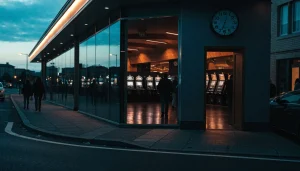
When “Open Now” Is a Venue Question
A request for pokies that are open now sounds like a question about machines. In practice, it begins with a room: whether a physical venue is operating, whether its gaming area is accessible, and whether pokies are available there at that moment. Those are related conditions, not interchangeable ones. A door may be open while a particular area is not; a venue’s general hours do not, by themselves, establish that its machines can be played.
That distinction matters because a search result can make a place appear more definite than it is. A listing may describe a venue, repeat hours supplied earlier, or use broad wording that does not address the gaming area at all. None of those details guarantees the state of the room when someone arrives. “Open” is an ordinary word carrying several separate questions: open for what, in which part of the premises, and at the time in question?
The practical answer is therefore less tidy than a glowing status label. Current availability is a condition that can change, while a listing is a description that may lag behind it. A venue name appearing beside a claim of pokies does not establish that the machines are operating at the moment of interest. Nor does a phrase such as “open now” settle whether access to the relevant room is included in the venue’s current activity. The distinction is mundane, but it is exactly where expectations are made.
Top operators
Choosing online pokies for Tasmania in 2026 starts with checking the details that matter to you, such as licensing and payment information. Use these entries as a reference point and confirm current terms and availability before playing.
-
7Bit Casino
- License
- Curacao, operated by Dama N.V.
7Bit Casino is operated by Dama N.V. and lists a Curacao licence.
-
Golden Pokies
- License
- Curacao
Golden Pokies lists a Curacao licence; no further operator details are provided here.
-
Rollero Casino
- License
- Curacao Gaming Control Board OGL/2023/176/0095 (Hollycorn N.V.)
Rollero Casino lists Curacao Gaming Control Board licence OGL/2023/176/0095, with Hollycorn N.V. identified as the operator.
-
GoldenCrown
- License
- Curacao Gaming Control Board OGL/2023/176/0095 (Hollycorn N.V.)
GoldenCrown lists Curacao Gaming Control Board licence OGL/2023/176/0095, with Hollycorn N.V. identified as the operator.
-
Ricky Casino
- Payout speed
- crypto under 1 hour, PayID 1-3 business days
- Min. deposit
- A$20 (A$30 to qualify for the bonus)
Ricky Casino lists crypto payouts in under an hour and PayID payouts in 1–3 business days. Its minimum deposit is A$20, or A$30 to qualify for the bonus.
-
Thor Casino
- License
- Curacao – Antillephone N.V. (Versus Odds B.V.)
- Min. deposit
- EUR 20
Thor Casino lists a Curacao licence through Antillephone N.V. (Versus Odds B.V.) and a minimum deposit of EUR 20.
-
MrPacho
- Payout speed
- crypto 30-120 minutes, fiat 24-72 hours
- Min. deposit
- A$30
MrPacho lists crypto payouts in 30–120 minutes and fiat payouts in 24–72 hours. Its minimum deposit is A$30.
-
SkyCrown
- License
- Tobique Gaming Commission
- Payout speed
- crypto ~10-15 minutes, fiat 1-5 days
- Min. deposit
- A$30
SkyCrown lists a Tobique Gaming Commission licence, crypto payouts of around 10–15 minutes, and fiat payouts of 1–5 days. Its minimum deposit is A$30.
-
Uptown Pokies
- License
- Curacao (operating since 2017)
- Min. deposit
- A$20
Uptown Pokies lists a Curacao licence, has been operating since 2017, and has a minimum deposit of A$20.
-
LevelUp Casino
- License
- Curacao eGaming OGL/2023/174/0082 (Dama N.V.)
- Min. deposit
- A$15
LevelUp Casino lists Curacao eGaming licence OGL/2023/174/0082, with Dama N.V. identified as the operator. Its minimum deposit is A$15.
A search for a named casino or venue in Tasmania needs the same restraint. A phrase such as “Crown Tasmania pokies” joins a familiar name to a place; the pairing alone is not confirmation that a particular Crown gaming room exists there or is currently available. Search language can assemble places, brands and activities with remarkable confidence. The words are not a booking desk.
It is useful to keep immediate availability separate from the broader question of formal operating hours. The first is a practical check about conditions at a particular venue now; the second concerns the hours a venue states or is permitted to operate. A published schedule may be useful, but it cannot do all the work of a live confirmation. Conversely, a report that a room is open at one moment says little about its usual schedule. Mixing the two produces a false certainty: a timetable mistaken for a live update, or a live snapshot mistaken for a standing rule.
There is also a human difference between finding a room and deciding how much room play should occupy in an evening. The physical setting encourages a sequence of small choices: stay a little longer, add another session, continue after an intended stopping point. Responsible-gambling tools exist to make those choices less dependent on the mood of the moment. Deposit limits can cap what is put in; loss limits can set a boundary around losses; session time limits can mark an endpoint; self-exclusion can prevent access to gambling for a chosen period.

These measures do not turn a venue’s status label into reliable information, and they do not guarantee that play will feel controlled. Their value is more modest and more concrete: they put boundaries in place before the atmosphere of a room begins to shape decisions. A limit has to be selected and used to matter. Self-exclusion, in particular, is not another way to check whether a venue is open; it is a tool for stepping away from gambling access.
That distinction belongs in any account of availability. “Can the machines be accessed?” and “Should access be restricted?” are not the same question, even when they arise during the same search. A page focused only on opening status can make availability sound like a service feature, as if the sole task were locating a lit room. But gambling access also has a personal boundary, and the tools for setting one are part of the practical picture.
The useful standard is modest: treat current availability as something to confirm with the venue, rather than infer from a search label, a general listing or a familiar name. That check concerns the physical place and its machines, not a promise that either will be operating simply because a result says “open.” Hours and present conditions are different kinds of information. So are access and choice.
A status light is not a guarantee.
Do
- Confirm current availability directly with the venue
- Use responsible-gambling tools like deposit and loss limits
- Treat published schedules as a guide rather than live updates
Don't
- Rely on search labels like "open now" as a guarantee
- Assume a venue's general hours apply to the gaming area
- Mistake a timetable for a live confirmation of access
What a Pokie’s Return Can—and Cannot—Tell You
A return figure looks like a firm piece of information in a business built around uncertainty. It can describe a game’s theoretical return across play, but it cannot promise what a particular person will receive, or what any one session will produce. That distinction matters whenever a pokie is described as one of the best-paying options in Tasmania: a published percentage is not a forecast for the next visit.
There is another qualification. A specialist review reports that some game providers allow casinos to choose between different return settings for the same pokie. In that arrangement, a figure attached to a title may not apply wherever that title is available. The game’s name can stay the same while its configured return differs between casinos. A general description of the game, without a setting tied to the particular installation, is therefore an incomplete basis for comparing returns.
That is a narrow but consequential point. It does not establish that every provider offers choices, or that every casino uses different settings. It means that a return percentage should be read with its scope attached: which version, which configuration and which venue it describes. A number detached from those details can sound more universal than it is.
The word “return” itself can invite an overly personal reading. In game information, it refers to a theoretical calculation across play, not a repayment schedule for an individual. It says nothing dependable about the order or size of outcomes in a particular stretch. A high published return, where one is stated, does not mean a machine is due to pay, nor that a player’s balance will move towards that figure during an afternoon.

Each pokie spin is determined by a Random Number Generator and is independent of the previous one. A run of losses does not make a win more likely on the next spin; a recent win does not make another one less likely. The display may give a sequence a sense of narrative, as though the machine were building towards something. The mathematics does not share that instinct.
This is why “best paying pokies” is a difficult phrase to treat as a ranking. It can imply a stable ladder of games, when the comparison may depend on settings and on what information is actually being compared. Even a correctly reported return remains a game-level description, not a guide to a particular player’s results. Nor does a title’s reputation establish the configuration used in a Tasmanian venue.
The same caution applies when a game is discussed alongside casino pokies in Tasmania or in a city centre. Location does not settle the return setting. A game’s title and its published information cannot, by themselves, confirm how a particular machine has been configured. That is a different question from whether a venue exists or where it is; the return figure cannot answer either one.
For a useful comparison, the important detail is not merely whether a percentage appears, but whether the information identifies the version and setting to which it belongs. If it does not, the apparent precision may exceed what the statement can support. And even a well-specified setting describes a theoretical return, not a personal outcome. There is no contradiction in saying that a figure can be informative and limited at once. It is a description, not a promise.
This distinction also keeps game information from becoming a substitute for judgement about risk. A stated return cannot turn a random activity into a predictable income source, and it does not make a loss recoverable by continuing. The figures can help explain how a game is described; they cannot tell anyone what the next result will be.
The attraction of a percentage is understandable. It compresses a complicated arrangement into something that looks comparable, and comparison is comforting. But the number has boundaries: it belongs to a stated configuration, speaks about theoretical play, and leaves each individual result uncertain. Beyond those boundaries, the figure becomes decoration.
Searching by Airport, CBD and Distance
Location-based searches turn a broad interest in Tasmanian pokies into a practical question of geography: which physical venues might be within reach of a starting point? An airport, a central business district or a region such as northern Tasmania can serve as a reference point. None, by itself, identifies a venue or establishes how far away one is.
The wording matters. “Near Tasmania” could mean somewhere on the island, close to a particular town, or simply within a journey that feels manageable. “Near the airport” is more specific only when the airport is identified. A distance estimate needs both ends of the trip, and the result can change according to whether it measures a straight line, a road journey or public transport. A number without that context looks precise while answering very little.
“Near me” has the same hidden dependency. A map service can interpret it only through a location setting or a place entered into the search. Without a defined starting point, proximity has no fixed meaning. A venue that appears close on a screen may still involve an inconvenient route; another farther away in a straight line may be easier to reach by road. The map is a tool for orientation, not a verdict on the journey.
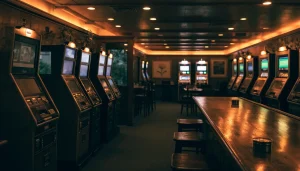
Airport searches can also blur different questions. Someone looking for pokies close to an airport may be considering a stop before departure, a visit after arrival or a venue somewhere in the wider region. Those are not interchangeable. An airport’s name in a search does not establish that a gaming venue is inside its grounds, nor that one is a short trip away. The distinction is useful precisely because search results can make nearby and on-site seem like synonyms. They are not.
The reference to Victoria introduces another geographic wrinkle. Tasmania and Victoria are separate parts of Australia, while a search phrase combining both may reflect a travel route, a comparison or uncertainty about where a place lies. It should not be read as evidence that a Tasmanian venue is close to Victoria. Geography does not become clearer merely because a search box joins two place names.
A careful location check begins with a named starting point and a clearly identified destination. The result should indicate what kind of distance it reports and, where relevant, the route used to calculate it. Venue details should then be checked against a current, direct listing rather than inferred from a map pin, an old directory entry or a broad regional label. A pin can mark an address; it cannot explain whether the listing is current or what facilities are there.
Regional labels are especially loose. “Northern Tasmania” may help narrow a broad search, but it does not define a single centre or travel radius. The same is true of “CBD”: it names a central district, not a distance from every possible starting point. In location searches, the useful unit is not the most confident-sounding phrase but the actual origin, destination and route.
This is geography, not a promise of proximity. A search can reduce the area under consideration; only a confirmed address and a route calculation can make the distance meaningful.
The Venue as a Public Room, Not Just a Machine Floor
A pokie venue is not merely a collection of machines. It is a public room where staff, patrons and the business share responsibility for what happens around play. That matters because the signs of gambling harm are human ones: distress, confusion, or behaviour suggesting that a person is no longer in control. A machine cannot notice those things. People can.
The language of oversight is becoming more explicit. A report published by regionriverina.com.au describes a requirement for venues with more than 20 gaming machines to have a dedicated responsible gambling officer (RGO) on duty while those machines are operating. The report also describes a gambling incident register, intended to record occurrences such as a patron showing signs of being at risk of, or affected by, gambling harm. These are reported regulatory measures, not a basis for assuming that every Tasmanian venue has the same arrangements.
The register is significant in a quieter way than a new machine or a bright sign. It turns an encounter that might otherwise disappear into a staff member’s memory into something capable of being reviewed. That does not, by itself, establish how consistently a venue recognises harm or responds to it. It does make the response less dependent on whether somebody happens to remember.

An RGO gives that responsibility a named place in the room. The role is not a guarantee that harm will be prevented, and a presence on duty cannot replace sound procedures or attentive staff. But it makes oversight more concrete: there is a designated person whose work concerns responsible gambling while machines are in operation. Accountability, in this setting, is less a slogan than a question of who sees, records and acts.
That distinction matters when people compare venues. “Best” can suggest a ranking based on the floor itself: the number of machines, the atmosphere, or the prospect of a win. None of those measures says much about how a venue handles a patron in difficulty. Nor does the existence of an officer or an incident register prove that a particular venue is safer than another. The relevant question is how responsibility is put into practice, not how reassuring its description sounds.
Public rooms have always reflected the rules of the society around them. A pub, club or gaming venue is private property in one sense, but it also hosts repeated encounters between strangers and staff, with consequences that do not stay neatly inside the room. Requiring a record of concerning incidents recognises that gambling harm is not simply a private misfortune. It can be noticed, documented and addressed by the institution that profits from the setting.
Still, paperwork is only the beginning. A register can capture an incident; it cannot make a response humane. An officer can be present; presence alone is not care. Those obligations are most meaningful when the room treats them as part of its ordinary life, rather than as compliance arranged for inspection.
A record is not a remedy.
Online Searches, the Spirit of Tasmania and the Limits of the Record
A search for pokies aboard the Spirit of Tasmania can point in several directions at once: towards a question about entertainment on a ship, towards a request for an online game, or simply towards a name that has become attached to gambling in someone’s memory. Those are different questions. The ship’s name, by itself, does not establish that pokies are available on board, or that a ship-specific online product exists.
The same caution applies to searches joining Tasmania with the Crown name. A phrase that sounds like a venue description is not evidence that a Crown casino operates in Tasmania or that its machines are available there. Search language is quick to make a place out of a combination of familiar words. The combination is not the place.
Online offers make the distinction more consequential. A request for real-money pokies or a no-deposit bonus may look like a simple question about access or cost. In Australia, however, the legal framework is directed at the companies providing the service: under the Interactive Gambling Act 2001, operators cannot offer real-money online pokies to people in Australia without a domestic licence. No Australian-licensed online casino exists. A promotional label does not change that position.
The law’s focus on operators does not turn an offshore offer into an Australian-regulated one. Australians may be able to play on offshore sites that accept them, but if an offshore casino refuses to pay winnings, players have no legal recourse in Australia. That gap matters more than the brightness of a bonus banner. It is the difference between an offer appearing online and a local route for resolving a dispute.

Nor does the word “deposit” settle what is being offered. A no-deposit promotion may be presented as a way to begin without paying in, but the label says nothing by itself about the operator’s legal status, the conditions attached to a promotion, or whether a claimed service is available in Tasmania. Those points cannot be inferred from a short description or from a ship’s name placed beside the word “pokies”.
Australia’s approach draws a firm line around the provision of online casino games, while the internet continues to display offers that may cross that line. That mismatch can make a result feel more official than it is. A page can be reachable; that is not the same as having an Australian licence, and a local-sounding name does not supply one. There is no domestic online casino framework behind such a claim.
The Spirit of Tasmania, a Crown-branded phrase and an online bonus therefore belong to separate questions: what a particular place provides, whether a named service exists, and whether an online operator may legally offer real-money pokies in Australia. Keeping those questions apart is less exciting than collapsing them into one neat answer. It is also more accurate.
Why “24-Hour Pokies” Needs a Venue Check
A claim of round-the-clock pokies sounds like a simple fact about a machine. In practice, it is a claim about a particular venue’s operating arrangements: whether the premises are open, whether gaming is available throughout that time, and whether those arrangements apply on the day in question. The phrase alone settles none of this.
That distinction matters in Tasmania, where a broad statement about continuous availability cannot stand in for the hours of an individual venue. A building might trade late without every service inside it being available for the same span. Conversely, a venue’s published opening hours would not, by themselves, establish that its pokies operate continuously. The room and the machines are related, but they are not interchangeable facts.
The same care applies to the word “24-hour”. It may describe an aspiration, a general trading pattern or a particular service, rather than a confirmed schedule for pokies. Search results and directory entries can compress these differences into a short label. Useful for scanning; poor as a guarantee.
A meaningful check therefore needs to be venue-specific and current. The relevant information is not whether Tasmania has “24-hour pokies” in the abstract, but what the named premises state about their own hours and the availability of gaming. If the information does not separate the venue’s opening time from machine operation, the distinction remains unresolved. A sweeping claim should not be made to do the work of a timetable.
There is also a social meaning in the appeal of uninterrupted access. The promise of a place that never closes suggests leisure without a boundary, as if a machine floor were outside ordinary time. Yet operating hours are among the ways a venue’s activity is bounded. They belong to local arrangements, not to the nature of the game itself.
That boundary matters for people as well as for schedules. Deposit limits, loss limits, session time limits and self-exclusion are tools designed to keep gambling within limits set by the person or the system. They do not prove anything about a venue’s hours, and they cannot turn an unconfirmed round-the-clock claim into a verified one. Hours answer when an activity is available; safeguards address how participation may be constrained. Different questions.
So “24-hour” should be read as a proposition requiring a venue check, not as a description of Tasmania’s entire pokie landscape. Without specific, current operating information, continuous availability remains an assumption. The phrase may be convenient. The timetable is the evidence.
Tasmanian Pokies and the Logic of a Single Spin
A pokie spin is determined by a Random Number Generator (RNG). Each spin is an independent random event, not a continuation of the one before it. The machine does not remember a run of losses and owe the next player a win; a win does not make another win more likely simply because it has just occurred.
That point sounds plain until a screen fills with patterns. A near miss can look like a hint, a sequence of small wins like momentum, and a long quiet stretch like something being withheld. These impressions are part of how people read games: human beings are alert to patterns, even when a sequence offers no dependable clue about what follows. On a pokie, the next spin is not a reply to the last one.
The distinction matters in Tasmania just as it does anywhere else. Talk of the best pokies in Tasmania can suggest that a title, a machine or a recent run might offer a reliable route to a favourable result. But the independence of each spin rules out that sort of prediction. A player may prefer a game’s appearance or pace; neither preference changes the random nature of the next outcome.
Bet size and cash payout are separate questions from prediction. A maximum bet concerns how much can be staked on a particular machine, while a maximum cash payout concerns what that machine or venue will pay under its rules. Neither tells what the RNG will produce on the next spin. Nor does a machine’s recent history provide a dependable way to work out whether a larger stake will be returned.
It is tempting to treat a sequence as evidence. A run of losing spins may seem to make a win due; a large win may seem to signal that the machine has become generous. Both readings give memory to something that does not use memory in that way. Randomness can produce clusters and lulls, but their appearance does not turn them into a forecast.
No omen.
This is why a sensible account of pokies begins with the small unit of play: one spin, then another independent event. The result of a previous spin is part of the machine’s visible history, not a reliable signal about the future. The same is true of a sequence that looks unusually orderly or unusually frustrating. Random outcomes need not look evenly scattered in the short term to remain random.
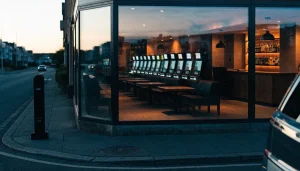
For anyone considering play, limits on deposits, losses or session time can help keep gambling bounded; self-exclusion is another available tool. These measures do not alter a spin’s outcome. They address a different matter: how much room gambling is allowed to occupy in a person’s life.
Online Pokies: A Search Term, Not a Tasmanian Venue
A request for online pokies in Tasmania can sound like a hunt for a local room, but the words point to two different things. A physical venue belongs to the state’s public landscape; an online gambling service is operated through the internet and is governed by a different legal framework. Adding “near Tasmania” does not turn an online service into a Tasmanian venue, nor does it establish that a particular provider is based in the state.
That distinction matters when phrases such as “best-paying pokies” or “high-limit pokies” appear alongside Tasmania. They may describe what someone hopes to find online, but they do not identify a local machine floor or establish that a game pays more in one place. A search phrase is not evidence of availability, local approval or a special Tasmanian setting.
Australia’s Interactive Gambling Act places the prohibition on companies that provide real-money online casino games to people in Australia. The law’s target is the operator, rather than the individual who plays. That allocation of responsibility does not make offshore services locally licensed or protected by Australian consumer safeguards; it describes whom the statute addresses.
Access is also constrained in practice. The Australian Communications and Media Authority blocks illegal offshore gambling sites, and internet service providers must follow its blocklist. A site appearing in a result, or being reachable at a particular moment, therefore cannot be treated as proof that it is lawful or dependable. Blocklisting is part of enforcement, not a quality mark.
A state’s physical gambling venues and the online services encountered from within that state should not be collapsed into one category. The first concerns places and their operations; the second concerns a prohibited service supplied to Australians by an operator. Tasmania in a search phrase is not a licence, a local address or an assurance that an online product has any connection to the island.
Nor does an online result become a sensible alternative merely because it uses familiar language about pokies. The legal arrangement leaves players outside the law’s direct target, while the service itself remains subject to the prohibition and may be blocked. That difference can be easy to miss in a search listing, where a location word sits beside commercial claims and makes the whole thing look provincial.
The distinction is plain. The wording often is not.
CBD Clubs and the Missing Local Venue Map
“CBD” sounds precise, but it is only a broad label for a central business district. Tasmania has more than one urban centre, and a reference to clubs or pokies in a CBD does not identify a particular venue, establish that it has pokies, or show what is available there. A confident list of central clubs, machine numbers or local rankings would require substantiated, venue-specific information. Without it, naming supposed “best” venues would turn geography into guesswork.
That distinction matters because a club is not simply a machine floor with a sign above the door. It is a physical place with its own facilities, rules and patrons. Even when a venue is associated with pokies, that association alone says nothing about the machines on offer or whether they suit any particular preference. “Best” is especially slippery: it can mean atmosphere, accessibility, food, machine choice or something else entirely. A general CBD label cannot settle the question.
The phrase “pokies in a Tasmanian CBD” can therefore describe an area of interest, but it is not a reliable directory. City-centre boundaries are not the same as venue boundaries, and a club’s location does not establish that its machines are operating or that every visitor will find the setting appropriate. Those are separate questions, best answered through information specific to the venue rather than a statewide impression.
Self-exclusion belongs in this picture as a way to set a firm boundary around gambling. Deposit, loss and session-time limits are also recognised tools for keeping play bounded. BetStop, however, applies only to Australian-licensed operators; it does not bind offshore sites. For physical venues, the useful distinction is between a general intention to avoid gambling and a concrete measure that can prevent access or limit participation.
The legal age for gambling in Australia is 18. That rule is clear; a CBD label is not. In a small place, false precision can travel quickly.
Cashless Play and the Limits of PayID Information
Cashless play at a physical venue and PayID belong to different parts of the transaction. A venue’s machines might be designed to take payment without notes or coins, but that says nothing by itself about whether the venue accepts PayID. Nor does a PayID option for a separate transaction establish that the machines are cashless. The arrangements have to be checked at venue level.
PayID is a way to direct a bank transfer using an alias: an email address, mobile number or Australian Business Number can identify the recipient instead of a bank account number. The service operates through Australia’s New Payments Platform, which is available through all major banks and protects transfers with end-to-end encryption. Those features describe the payment infrastructure, not the nature or standing of whoever receives a transfer.
That distinction matters around gambling. A specialist review reports that some Australian banks, including the Big Four, sometimes block PayID transfers to merchants they identify as gambling businesses. Such restrictions may vary with a bank’s policies and the recipient’s classification; a transfer that works once is not evidence that it will always work. Equally, a blocked transfer does not tell anything conclusive about the physical venue’s machines.
Payment acceptance is not a certificate. PayID support cannot establish that a gambling service is licensed, that a game is fair, or that a venue has adopted cashless gaming. It is simply a payment route, and the route may be subject to a bank’s controls. Practical convenience and regulatory status are separate questions.
The term “cashless pokies” can therefore suggest more than it establishes. It may refer to how a venue handles payment at machines, while PayID concerns the movement of money between accounts. One is a venue arrangement; the other is a bank-transfer system. The distinction is modest, but useful.
Are online pokies rigged?
No—each spin is an independent event determined by a random number generator. However, the same pokie can have different theoretical return settings at different casinos, so check which setting applies to the specific game and venue.
Do PayID deposits qualify for bonuses?
Yes. PayID is treated like any other qualifying deposit method at the sites that offer it.
What is the cost-benefit calculation of casino promotions?
Compare the bonus with its wagering requirement, any withdrawal cap on winnings, and the amount you must bet before cashing out. For example, a $500 bonus with 40x wagering requires $20,000 in bets; if the requirement applies to a $500 deposit plus a $500 bonus at 35x, it requires $35,000.